Thirty-four miles to go.
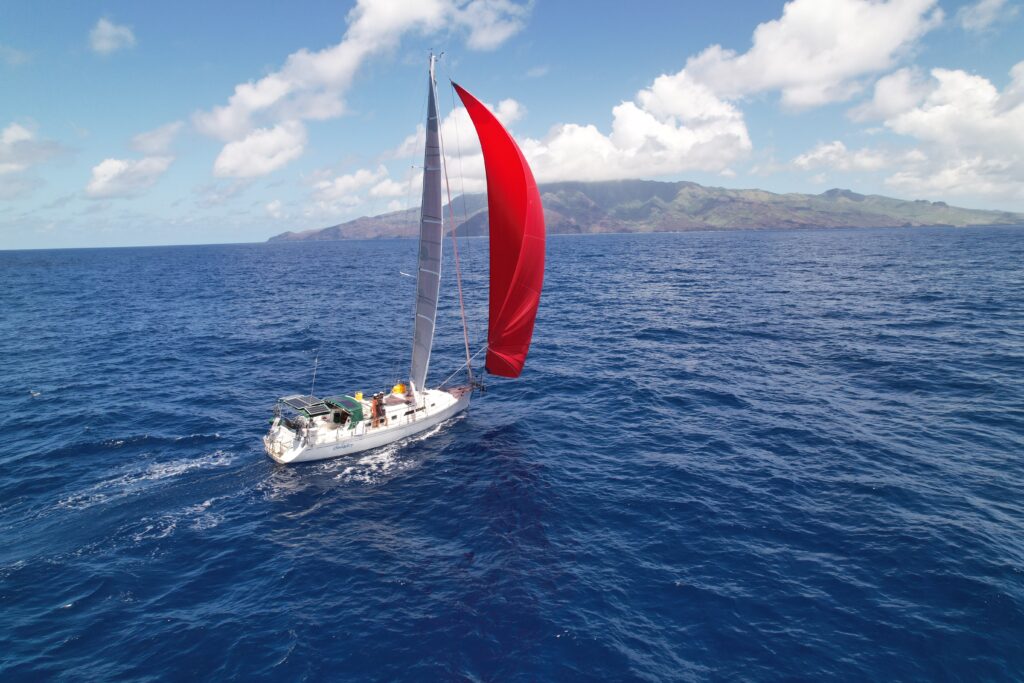
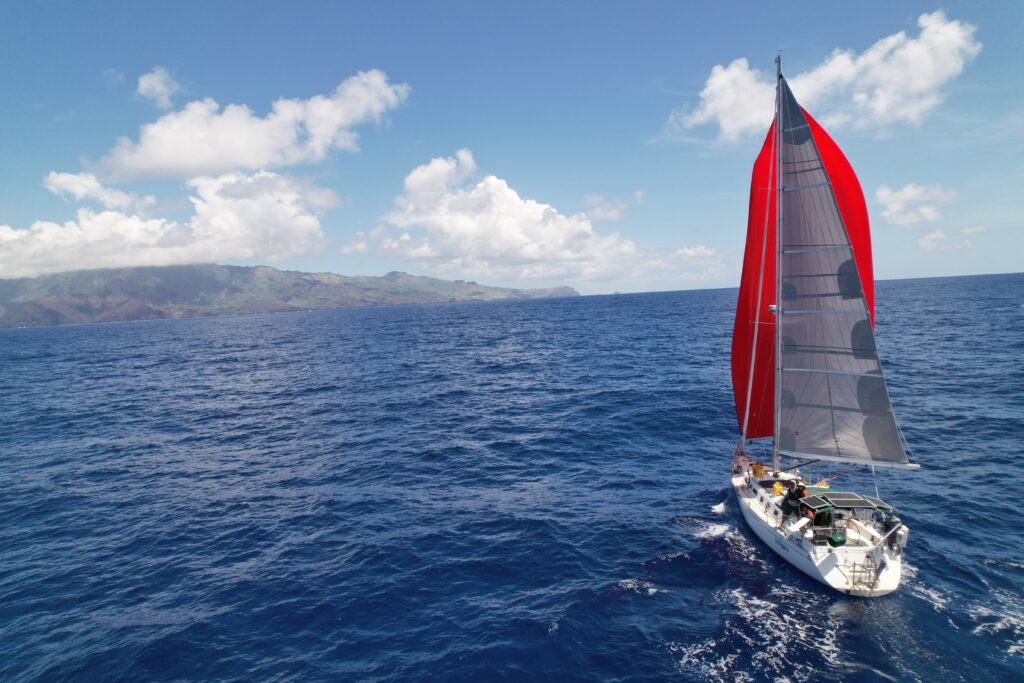
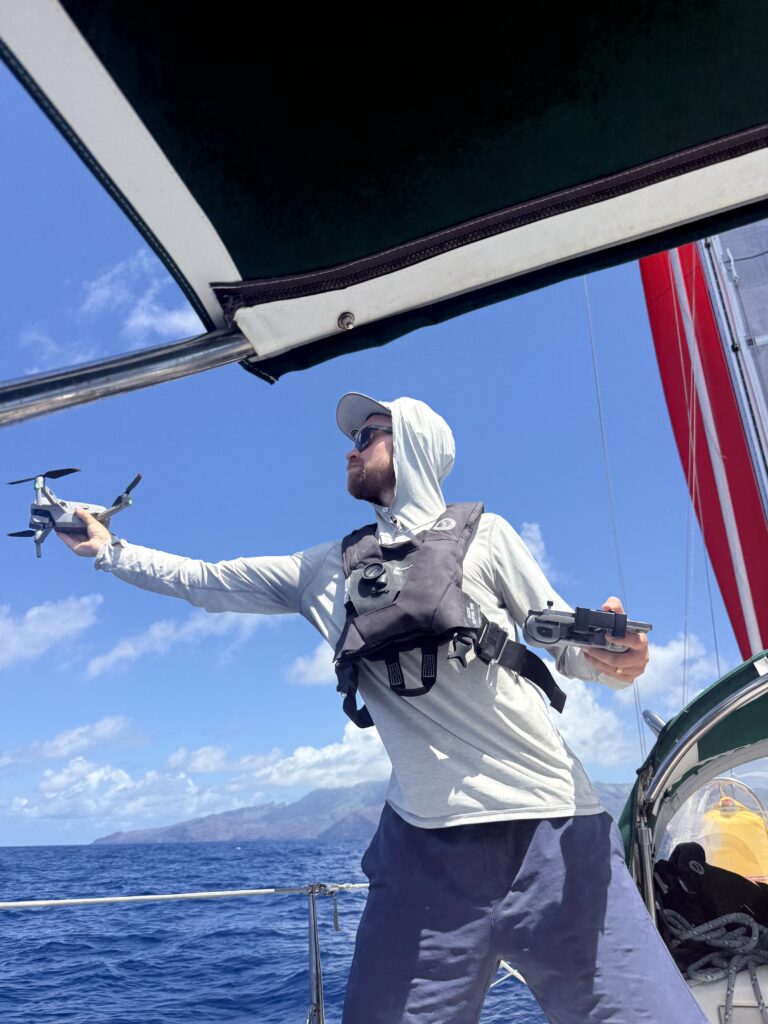
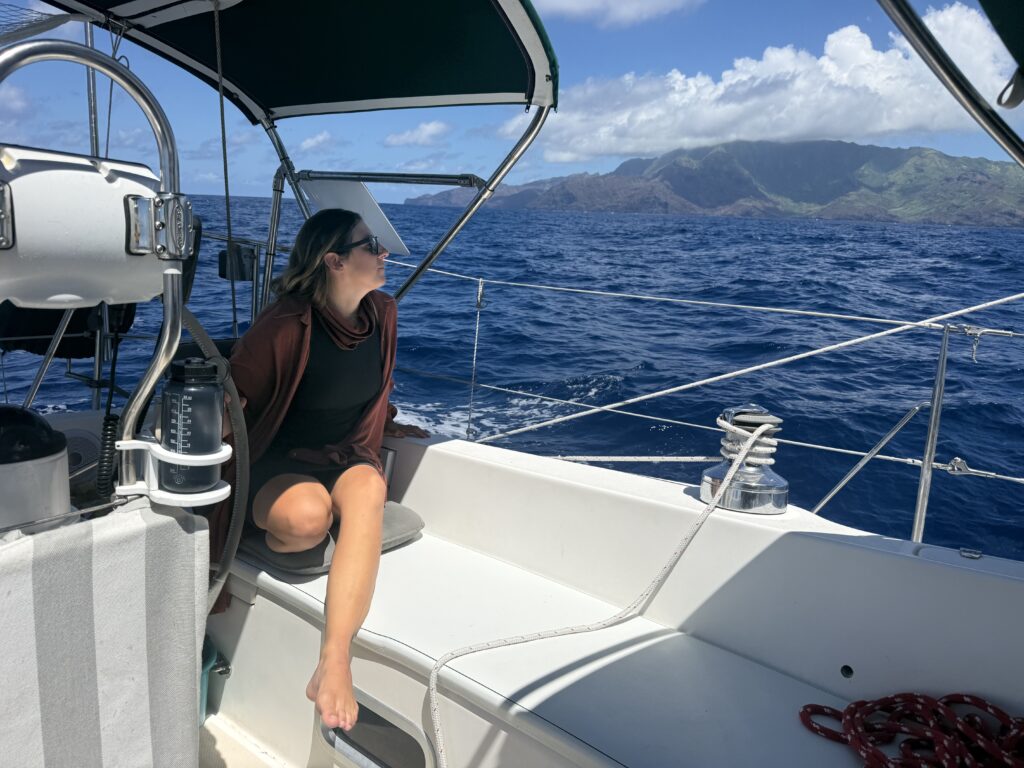
The beers were cold in the fridge, country music blasted through the cockpit, and Mason and I were giddy with our anticipated arrival. Smiles wide, we launched the drone for one final photoshoot as our first land sighting, Ua Huka, rose from the Pacific. A pod of dolphins appeared off the bow, weaving through the waves as if they had been sent to escort us in. After nearly three weeks of a very limited color palette the sight of green felt almost overwhelming.
We were about to reach the Marquesas!!
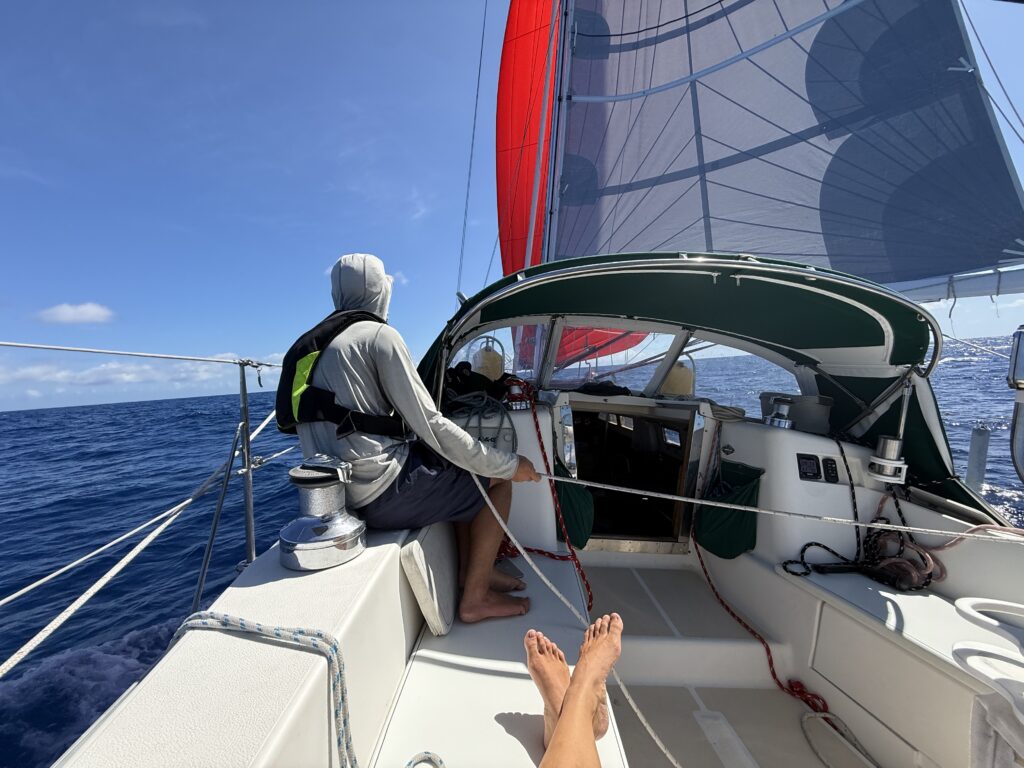
Back in Mexico…
18 Days earlier we were chatting daily with cruisers on the streets of La Cruz. The Pacific would be our longest passage by far, but weather-wise it was expected to be pretty tame: easy downwind sailing where you don’t need to adjust the sails day after day. Weather windows for departure were the topic of conversation on every dock, and you couldn’t get street tacos without someone asking if we were bringing crew along. My response was always the same:
“Crew? Three weeks on a 43-foot boat? I’ll kill them.”
We really only considered immediate family since they know exactly what they’re signing up for. Besides, another person means another mouth to feed, another person to teach all of Discovery’s quirks, and giving up the aft cabin where we had crammed five boards (kite, wing, and surf). Most importantly, with another person aboard, we couldn’t be naked all the time!
I called my mom the morning of our departure and she answered from her car alongside Jane Lindenburg and Amanda Cordano, two family friends I love dearly. We shared tears, something that always seems to happen before a big offshore passage. A release of all the preparation and anticipation for what’s to come.
My mom was particularly nervous about this passage. “I really thought about flying out to sail with you,” she said, “but decided I would get in the way. I just want to be there to go down with the ship.” Good god!
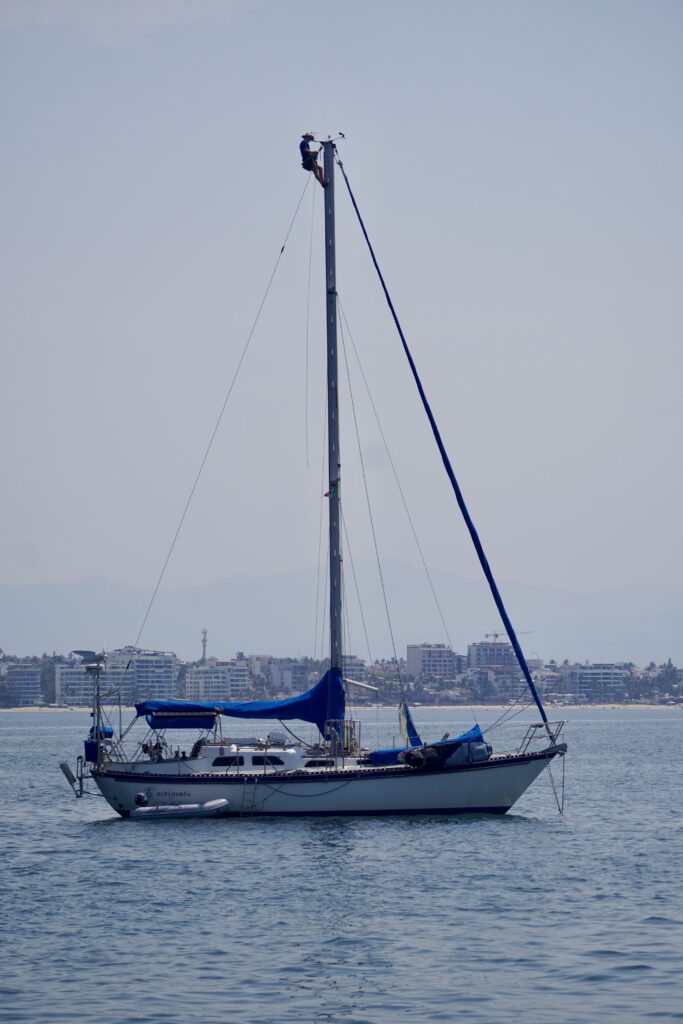
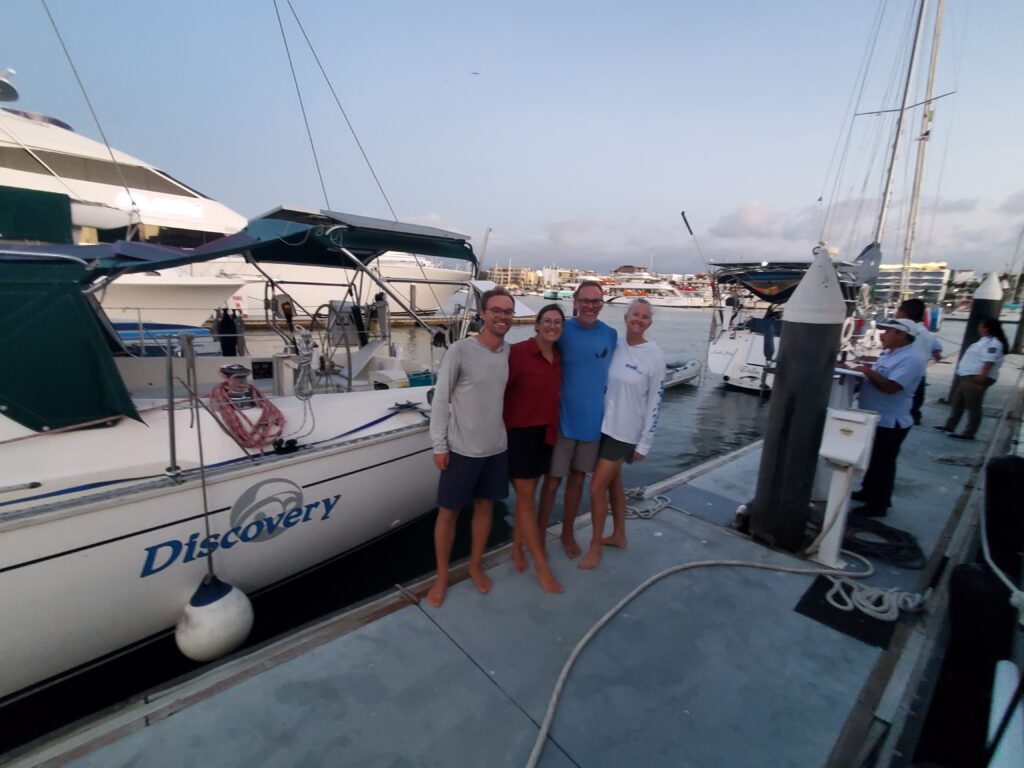
Phase I: Get the Hell of the coast
So we set off, just the two of us and sweet Loops. We departed La Cruz at 1400 on March 30th and set sail for the South Pacific. On the outskirts of Bandaras Bay, a pod of Orcas surfaced around us. Despite their behaviors in Portugal, I’ve always considered orcas a good omen. The first time Mason and I ever sailed Discovery, we were greeted by them. Seeing them again on departure day felt like the ocean whispering, You’re making the right call. Keep going.
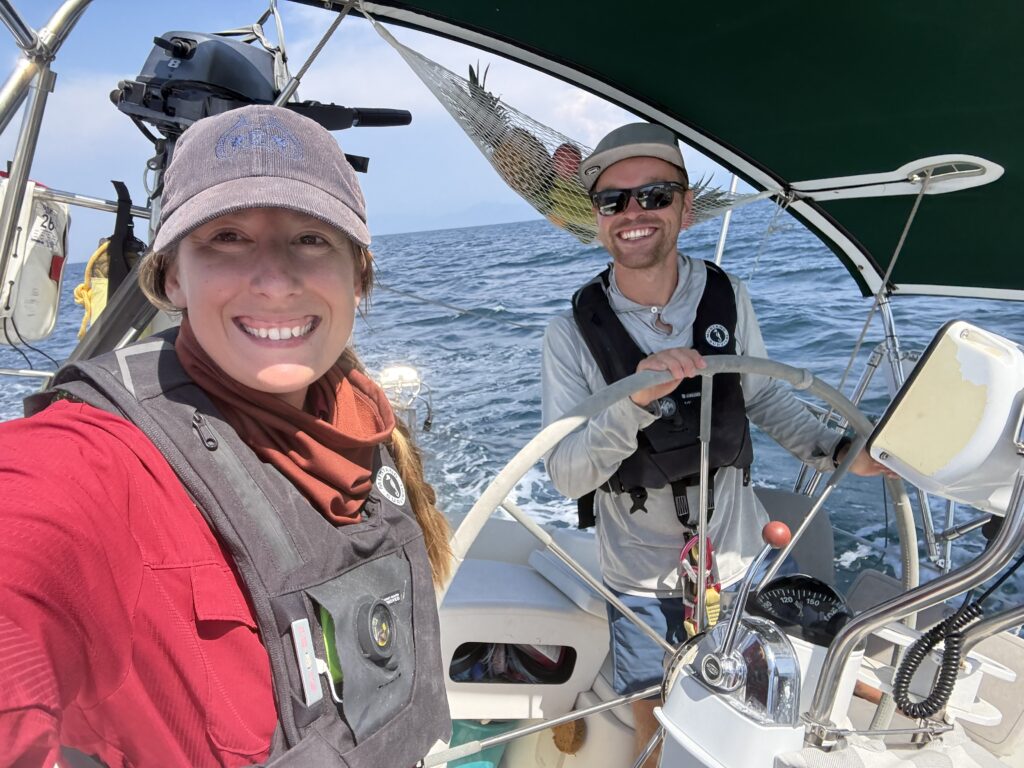
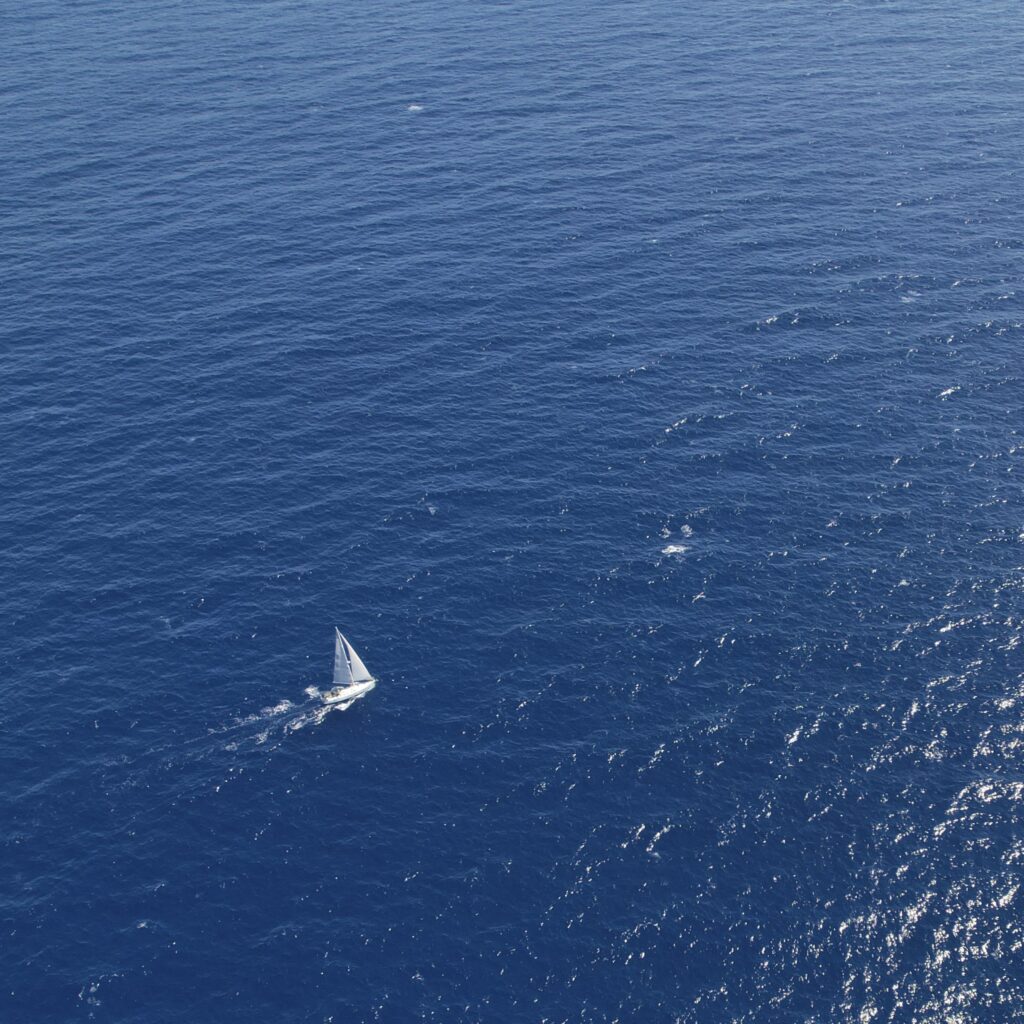
Our friends, Stella Blue and Worldwind, departed three hours ahead of us (~21nm), so we had some serious work to do to catch up. We put up the code zero around 1800 and flew it the entire night. This is a very niche sail which can only be used in a very narrow band of wind angles & speeds. It’s rarely used and we often question why we brought it at all. Then it carries you off the coast of Mexico at seven knots in eight knots of wind and suddenly it’s the most important sail on the boat.
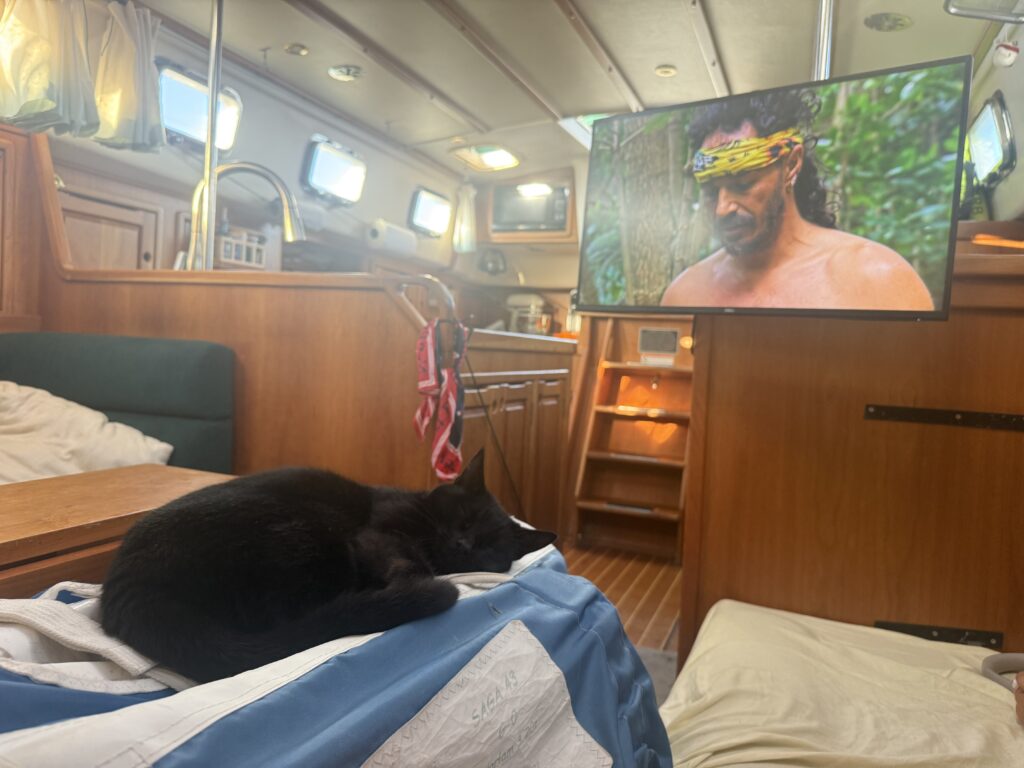
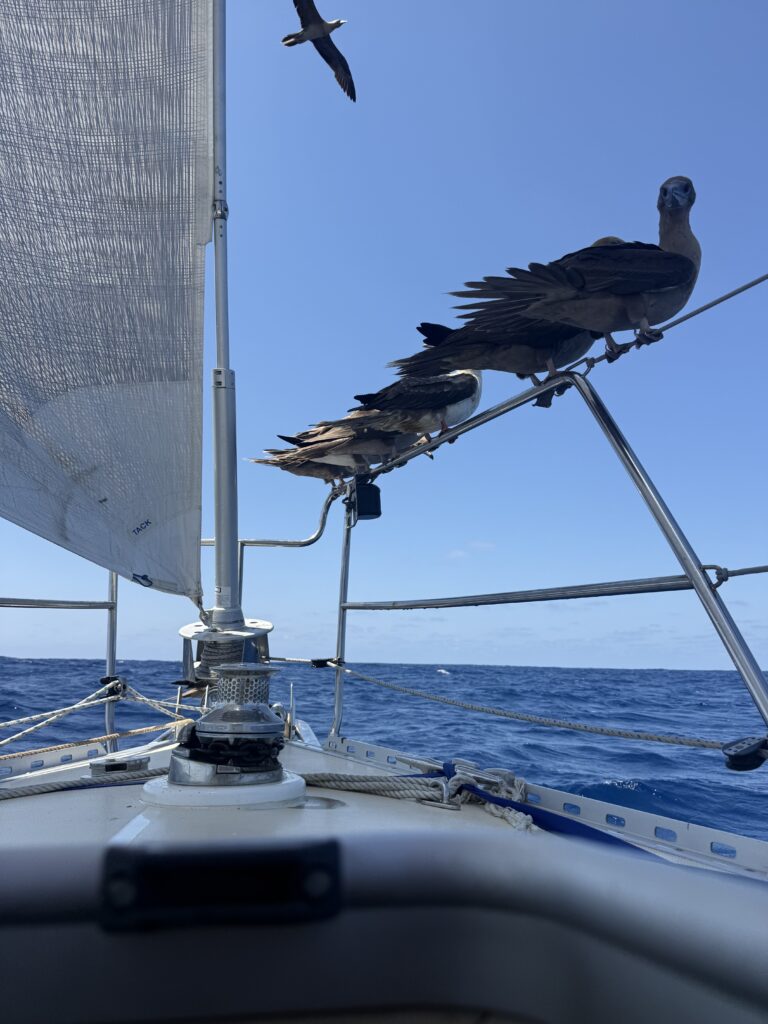
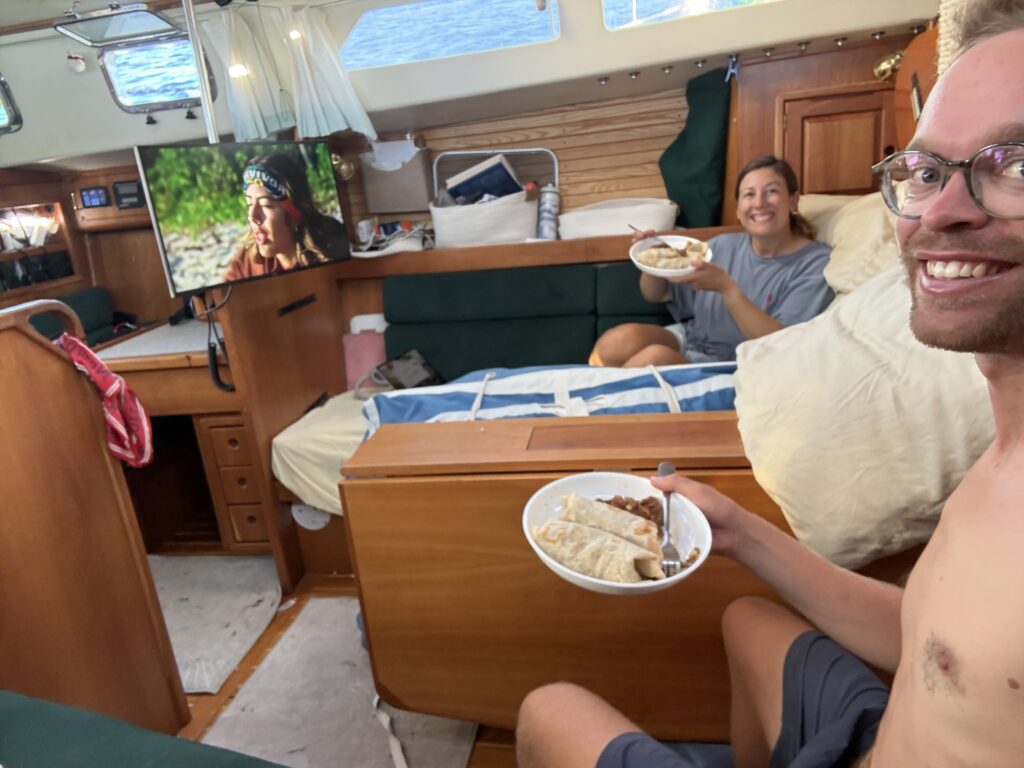
The first few days were spectacular sailing. We figured out how to use our Monitor windvane, which we’ve aptly named, Marty. One evening we watched Survivor down below while Marty steered us along at 9+ knots. Even with 8 juvenile boobies hitching a ride on the rail. We’d pop upstairs during commercial breaks to tweak his settings, and when the presidential address interrupted the episode, we put in a reef. What a champ.
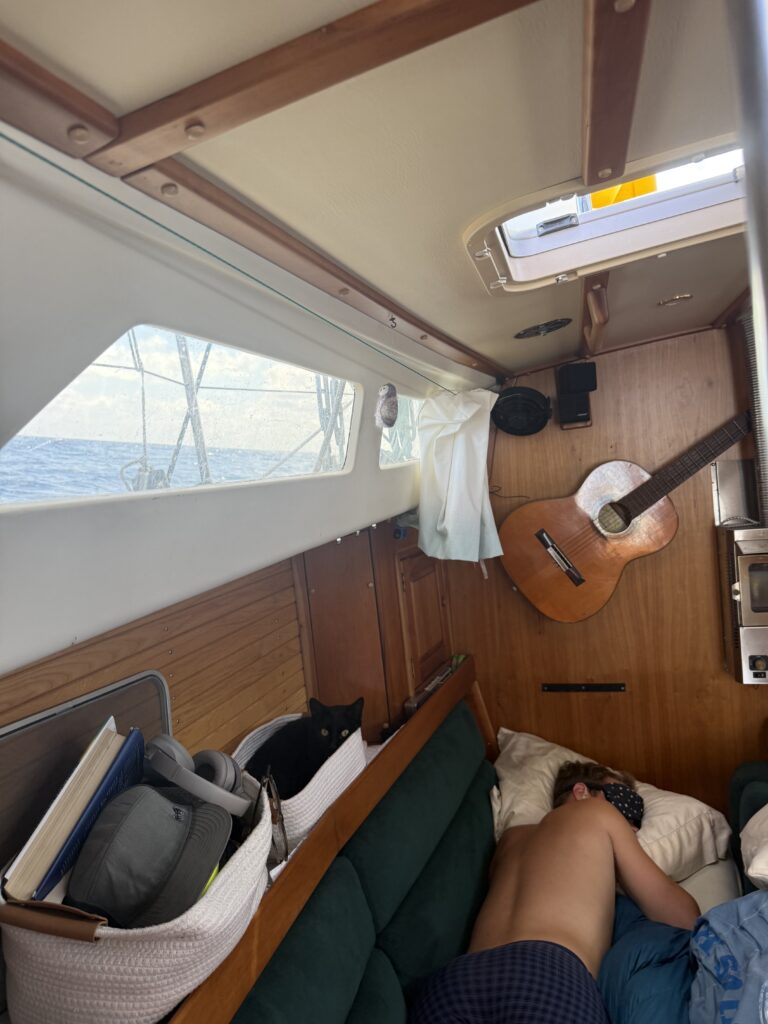
By Day 4 the initial excitement of passage had worn off. We were well beyond Socorro Island and it was starting to sink in that it was just us, Discovery, and a lot of blue water for the next couple of weeks. Ironically, around this time Mason called his family and they asked, “can you still see land?” Ermmm, not quite! That realization came with some freedom. With nothing to hit and nobody around, we discovered there wasn’t much stopping you from taking 20 minute naps on watch. This strategy worked remarkably well until Mason woke up one morning doing three knots and forty degrees off course. Not exactly our fastest day.
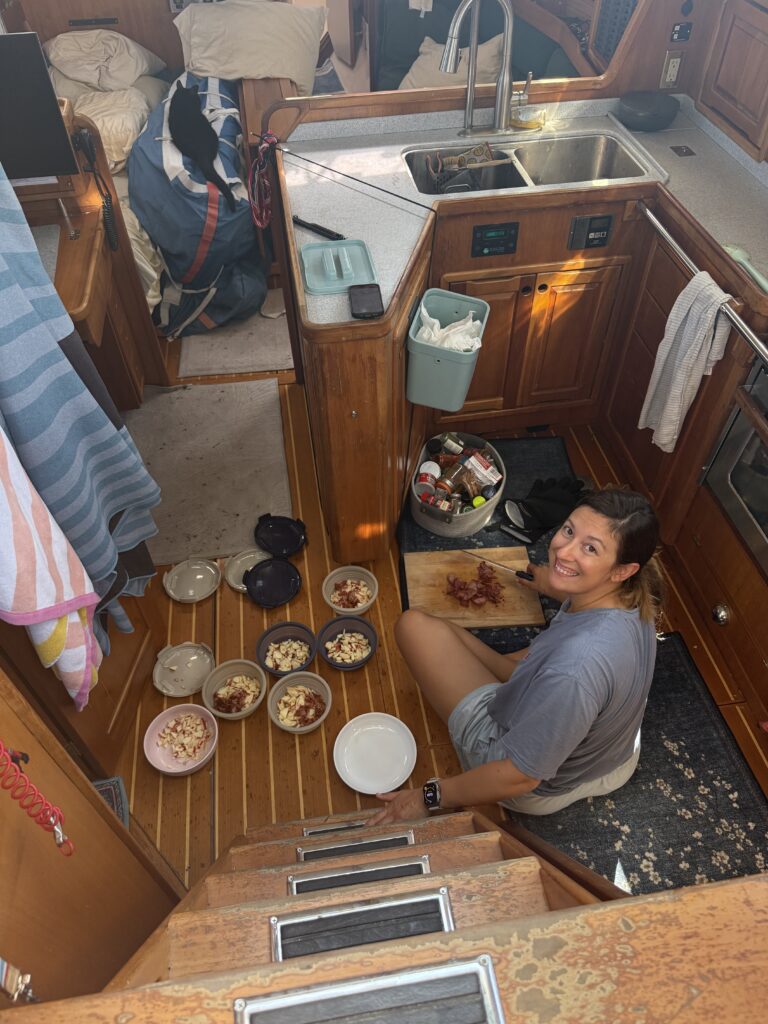
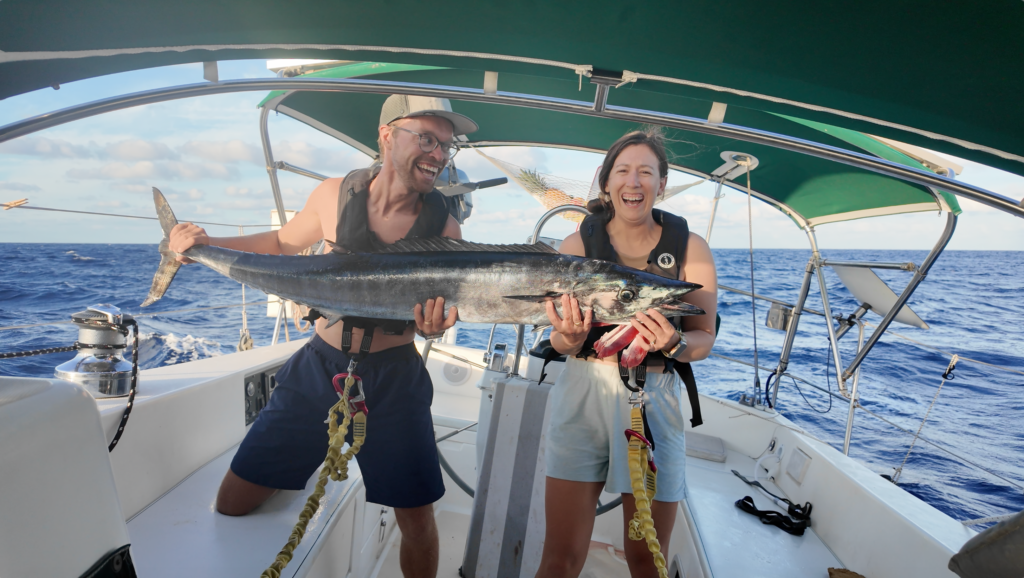
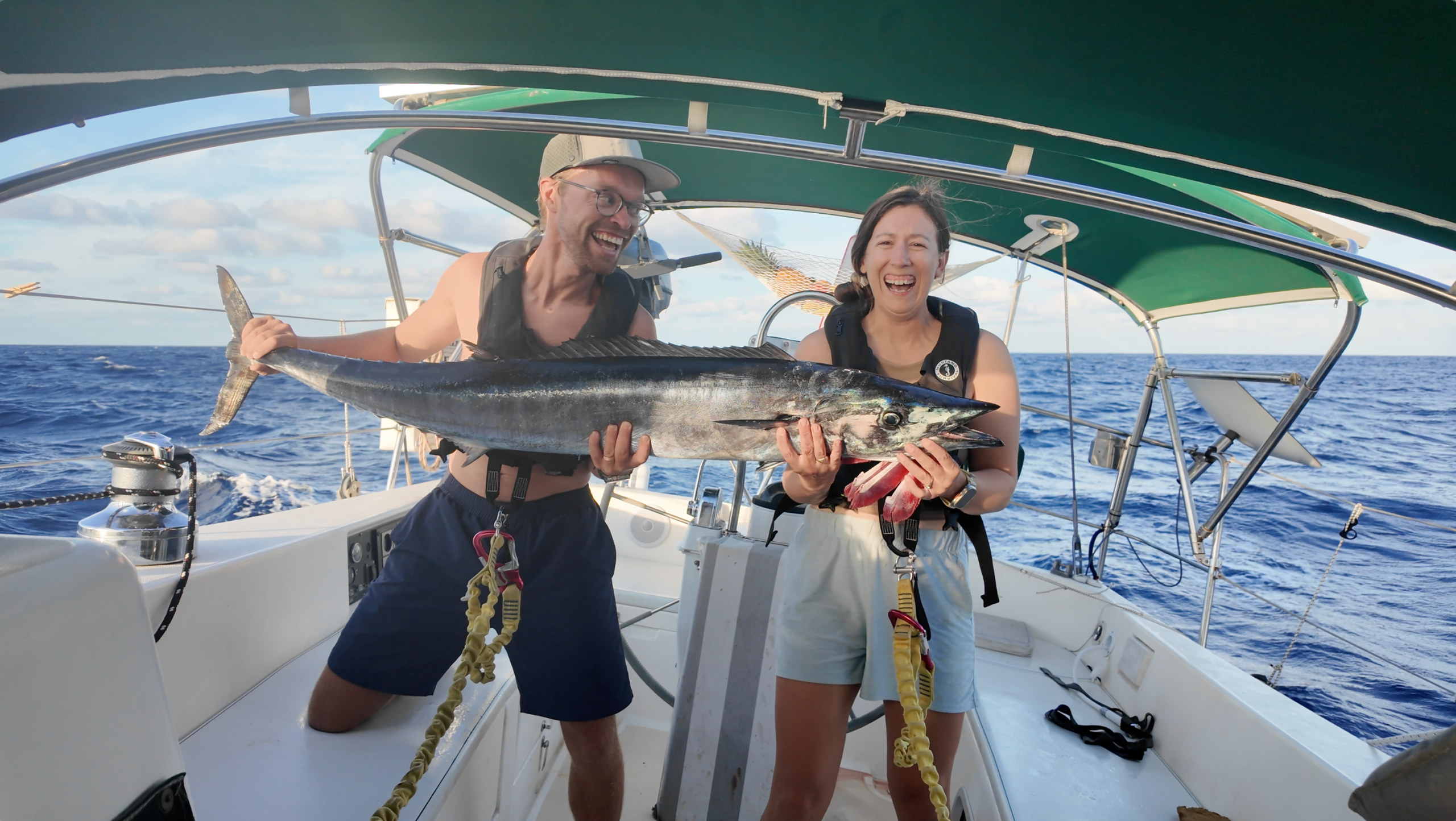
Luckily on the evening of day 5, we finally caught a fish! We’d spent days listening to other cruisers catch mahi after mahi and dine on freshly caught yellowfin tuna sashimi while our lines came up empty. Meanwhile I’d been confidently telling anyone who would listen about the metal leaders I’d bought specifically for wahoo.
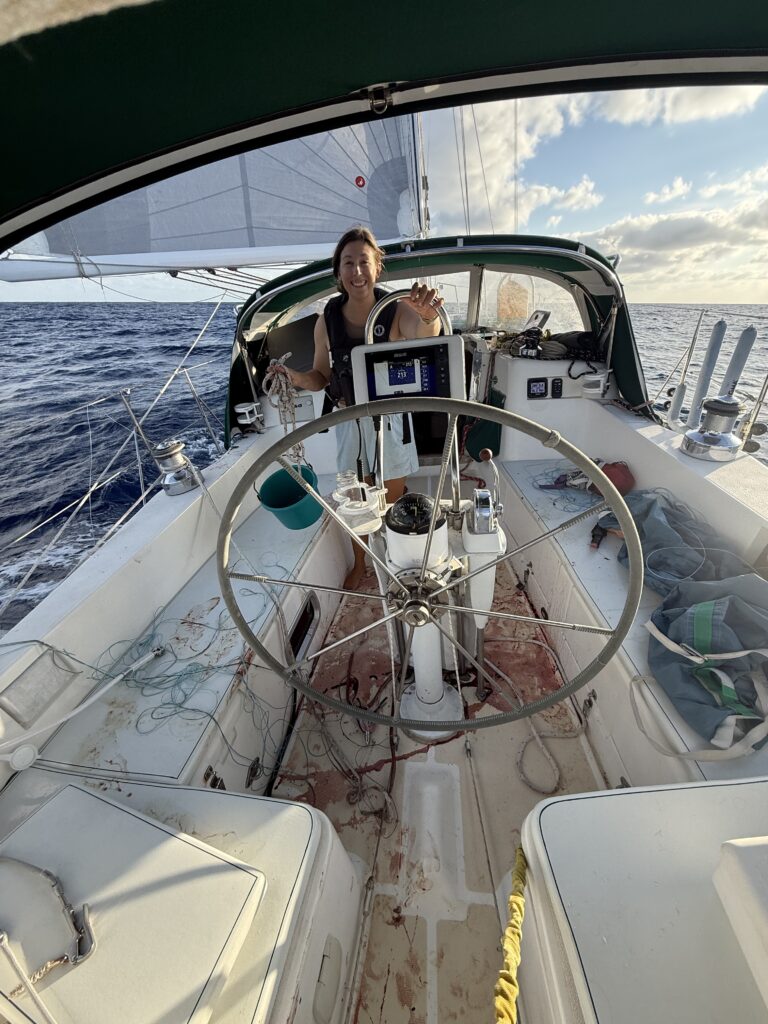
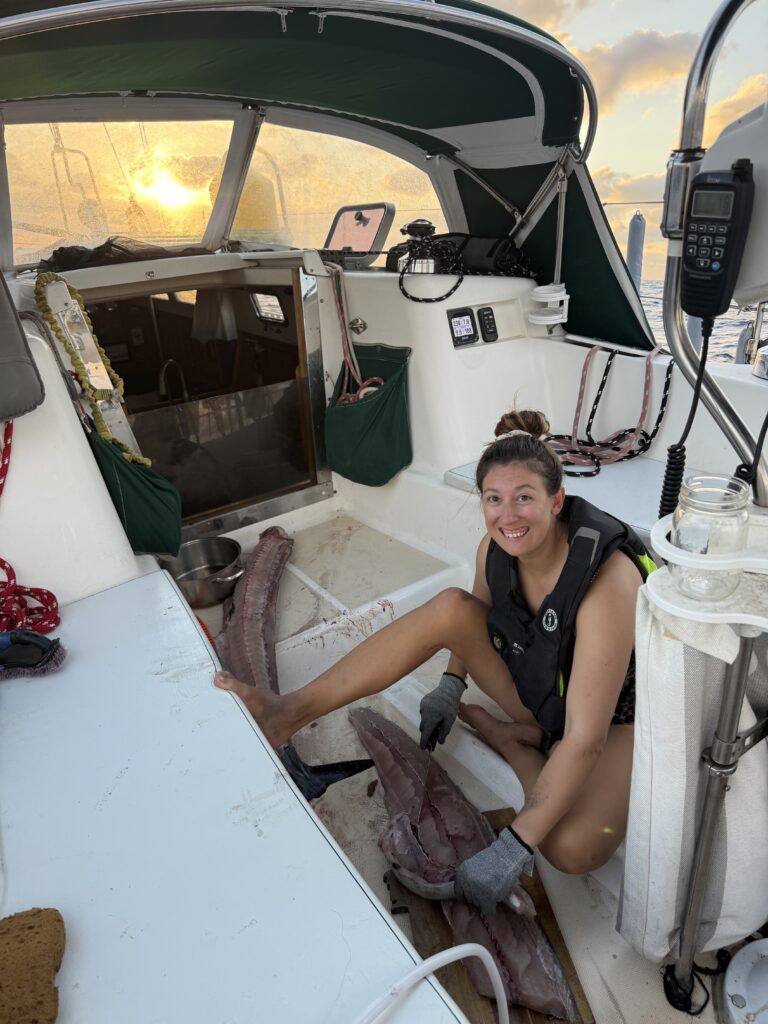
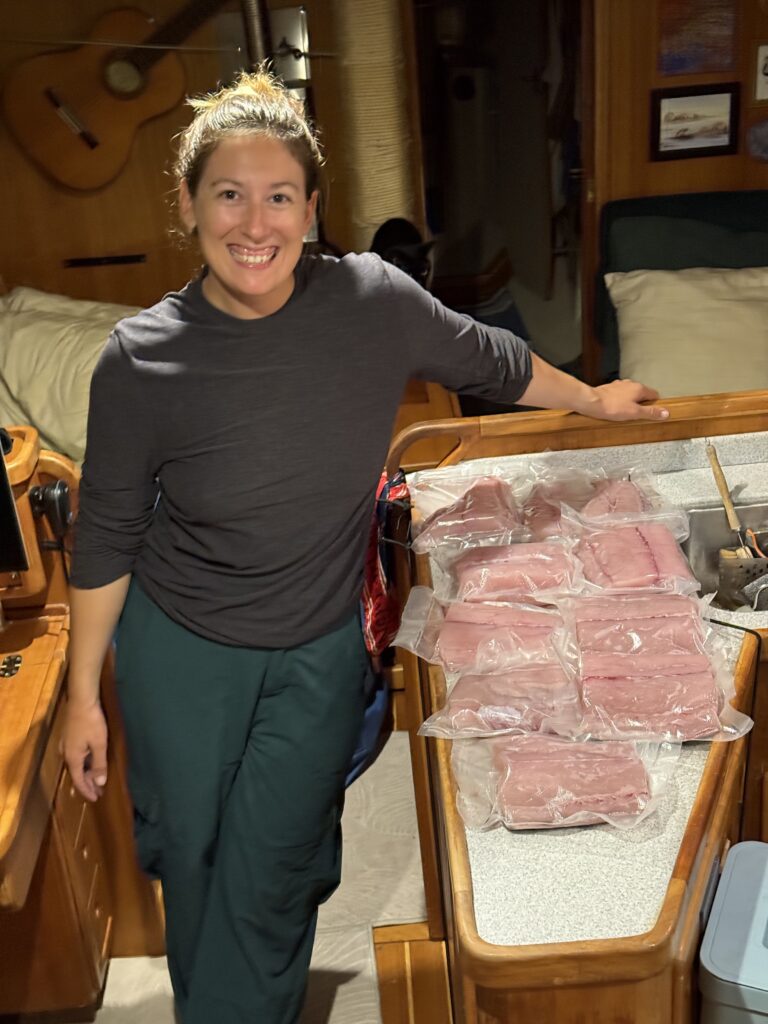
At the 1800 watch change, I came on deck to take down the gennaker and FISH ON! We jumped into action, furling the sail at record speed. I hauled in the line while Mason got the shoddy gaff ready. When the fish came alongside, we couldn’t believe it, this thing was nearly as tall as us and definitely the largest fish we’ve ever pulled in. We both had flashbacks to the fish that got away (yellowtail, albacore…). But not this time. Mason landed a perfect jaw gaff shot and hauled the massive Wahoo into the cockpit which quickly became a crime scene The next two hours, we turned into a full-on fish processing plant: filleting, packaging, and cleaning. We were SO stoked.
Phase II: Northern Trades / Position for the ITCZ
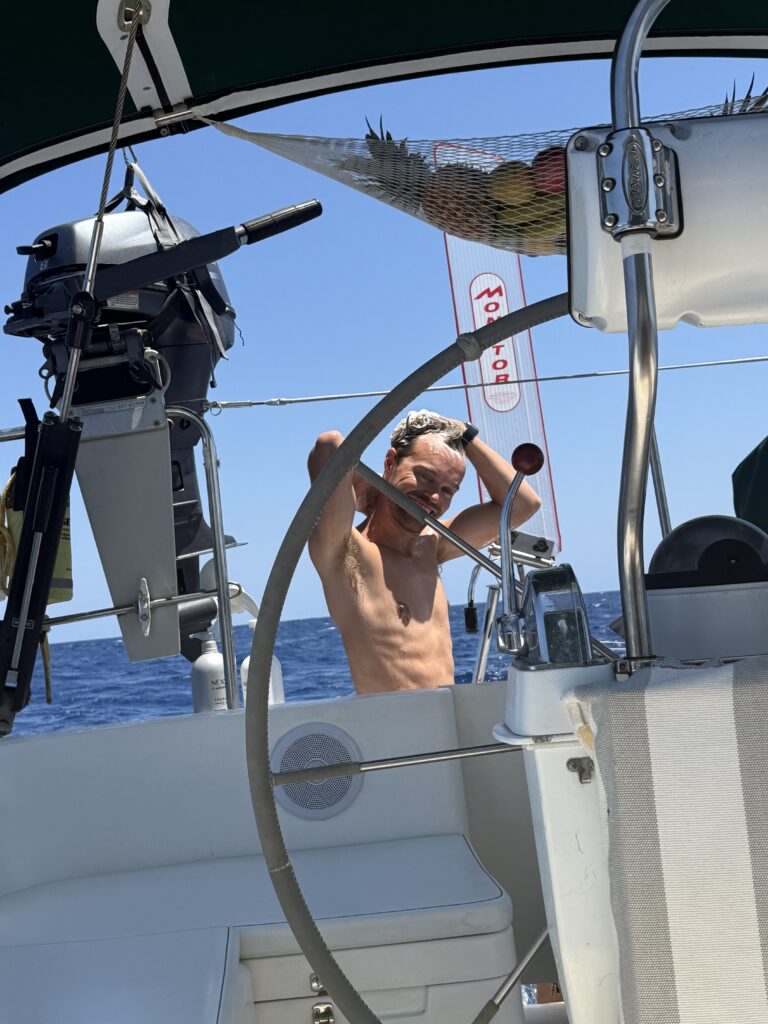
By day six we had successfully navigated the fluky winds off the coast of Mexico and were firmly in the Northern Trades. We learned the joys of trade wind sailing: moderately strong, very consistent wind with following seas, the kind of sailing dreams are made of. We were moving fast, and our cruising friends were starting to notice.
“Catching up to us fast! Wave as you pass, Discovery.” – SV Milly
“Discovery is an IMOCA 60 disguised as a Saga 43” – SV Kaliyah
“Very impressive performance so far, guys! We all want to know what your secret is? Your boat speed has been impressive in all of the angles.” – SV Worldwind
We had talked a big game about our previous offshore racing history and fast hull. Thankfully, we were living up to it! Down below, our rocket ship sounded like one too. Our head is in the bow, so going to the bathroom feels like preparing for liftoff, with water rushing mere inches from the fiberglass.
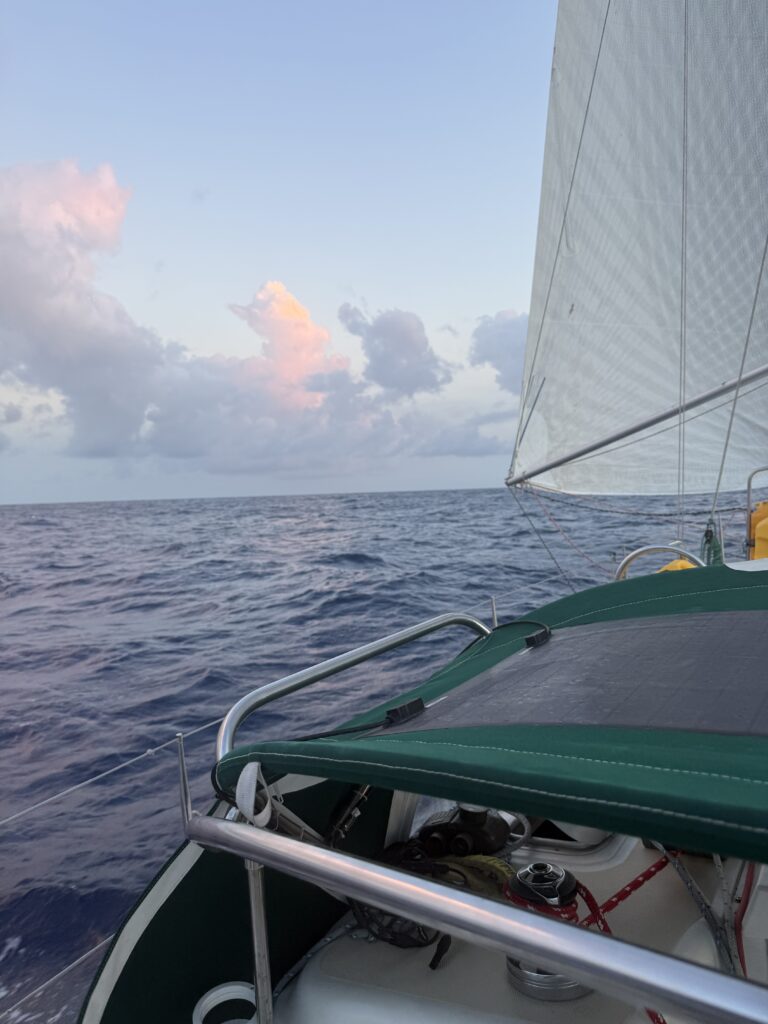
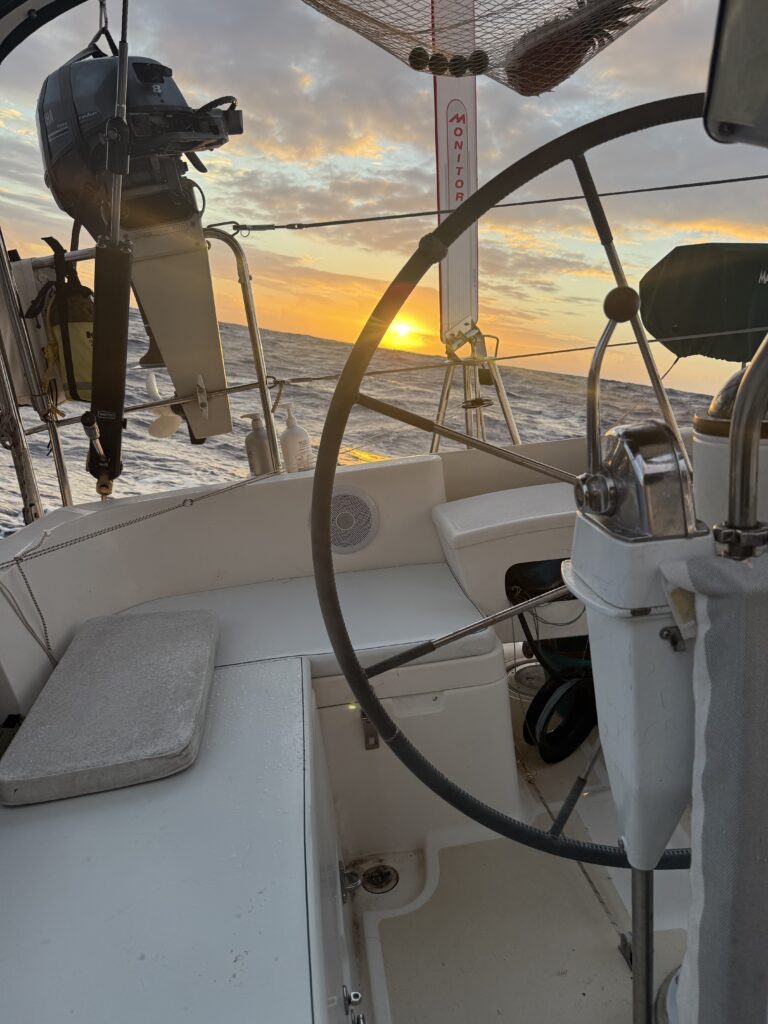
As we got deeper into the trades, the seas built. Two swell patterns collided, with waves up to 10 feet. Discovery would surf down one, then get smacked broadside by the other almost every minute. Our stallion, Discovery, is up to the challenge with lightweight jockey, Marty, at the helm.
Phase III: The Intertropical Convergence Zone (ITCZ) / The Box
The Box is a 600 x 600 nm zone bounded by the equator, 10°N, 130°W, and 120°W. The goal is to enter from the top or right side, cross the ITCZ at a narrow point, and exit out the bottom. The Intertropical Convergence Zone is where two major weather systems collide just north of the equator. The Northern Hemisphere trade winds spin clockwise while the Southern Hemisphere trades spin counterclockwise. When they collide, they leave hundreds of miles of potentially zero wind in their wake.
Sailors have been known to lose their minds out here, stuck for weeks near the equator in humid, stagnant air. The 1832 Rime of the Ancient Mariner captures it well:
Day after day, day after day,
We stuck, nor breath nor motion;
As idle as a painted ship
Upon a painted ocean.
For three days, every watch change turned into a strategy session on the ITCZ. We talked it through together, comparing notes with other cruisers out here and on land. We decided to keep our options open and aimed for the northeast corner of the Box, figuring if the ITCZ widened, we could keep heading west instead of south searching for a narrow band. However, once we reached the NE corner, we found a narrow patch of no wind and turned south aggressively.
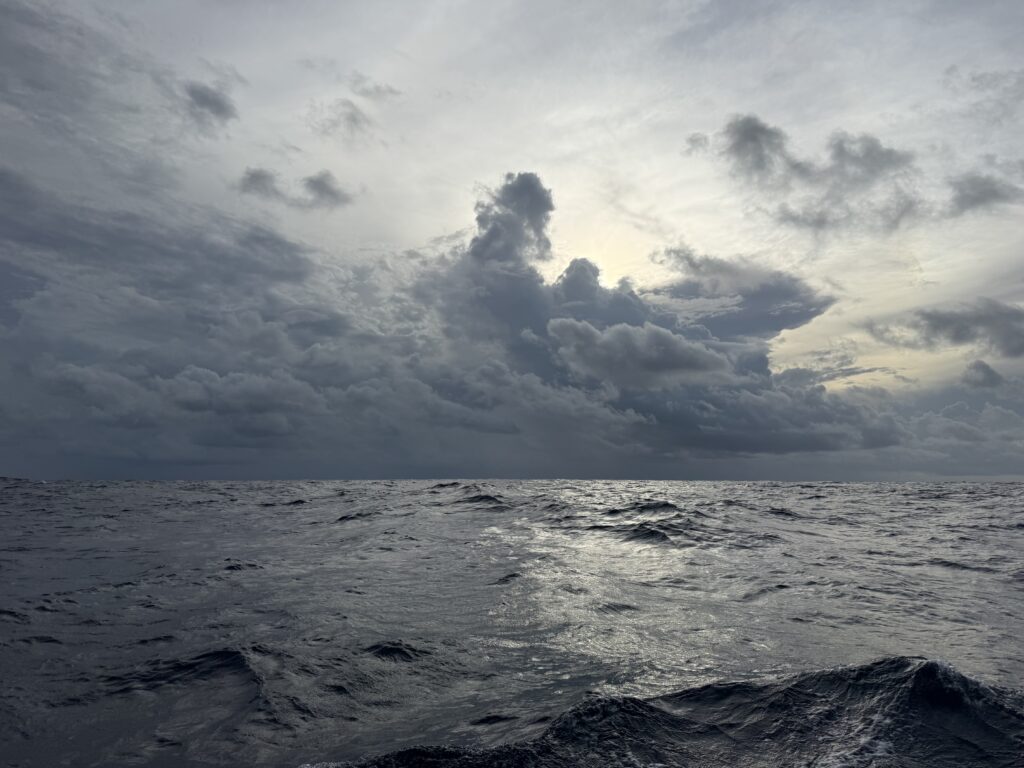
Our time in the ITCZ wrapped up on day 10 and ended up being surprisingly notable: strong southern trades reaching unusually far north, and a welcome lack of squall activity. I like to think D.O.D. was looking out for us on that one. Other cruisers weren’t as lucky. Several of our friends ended up sitting under a five-plus hour squall, with one of our sister ships broaching in a 40+ knot gust. No one was hurt and nothing broke, but it was a reminder of how quickly things can turn out here.
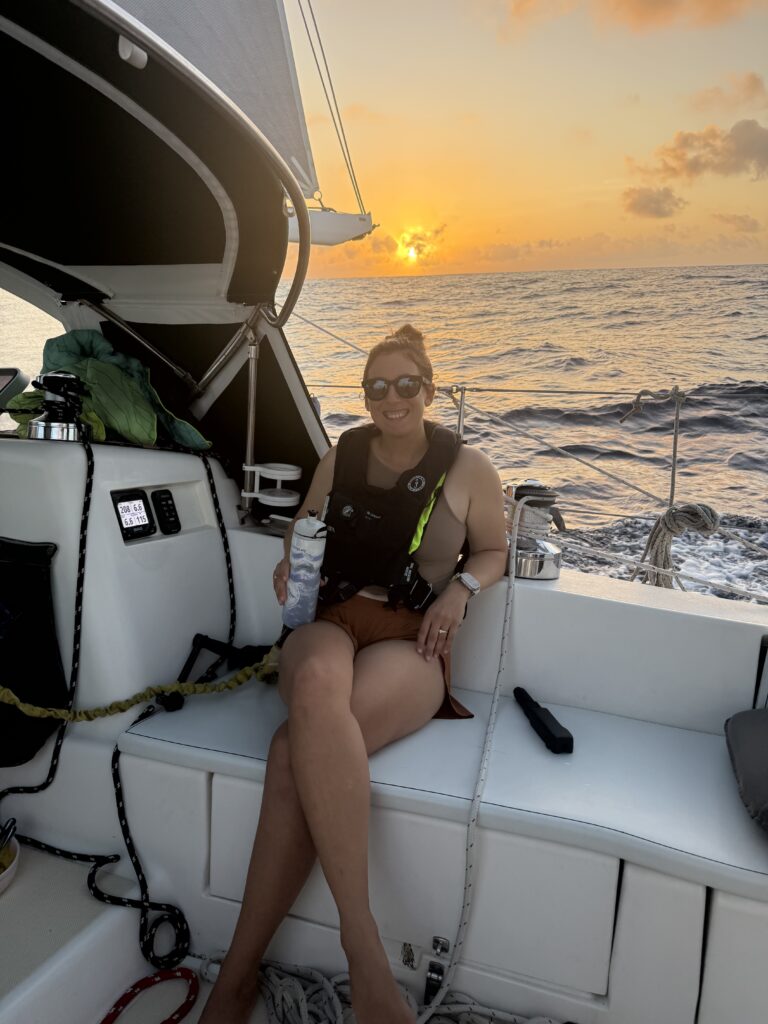
On day 12 we crossed the equator, becoming proper Shellbacks at 01:00 in the morning. While Mason was dead asleep, I rummaged around for something suitable to offer King Neptune. In the days of Captain Cook, first-time equator crossers were given a choice: surrender a week’s worth of wine rations or endure a “ducking” from the end of the boom into the ocean. Most sailors chose the baptism, some coming uncomfortably close to drowning.
For us, in the dark of night, ducking seemed like a bad idea. Tequila would have to do.
Phase IV: Get in Southern Trades and Point at the Marquesas
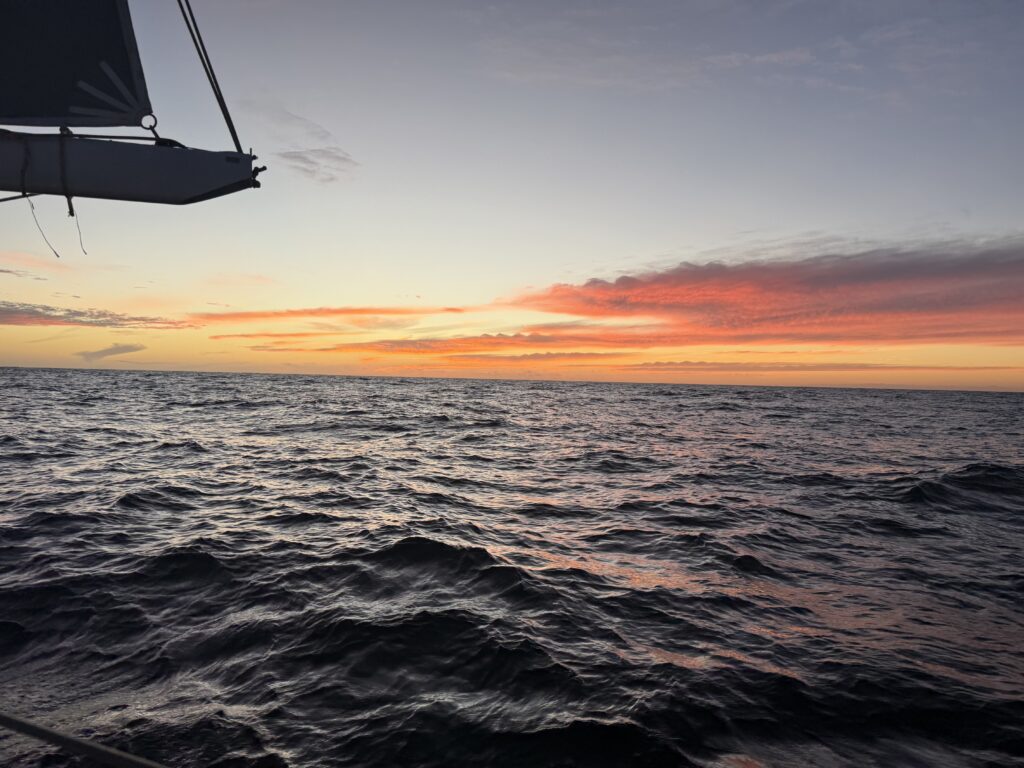
Unfortunately, Neptune didn’t seem to approve of our Agave offering. Almost immediately afterward, the wind shut off, and we were left making slow progress for the rest of the night. We were due for some pac crossing pain. We’d had a fantastic crossing so far. We had successfully threaded the Box, caught the biggest fish of our lives, and somehow managed to avoid all the horror stories we’d heard about the ITCZ. Discovery was flying, morale was high, and we were already starting to think about arrival dates.
On Day 13 we found ourselves skirting the edge of the ITCZ again, desperately searching for the stronger breeze that every forecast insisted was just around the corner. We kept hearing it would arrive tomorrow… and tomorrow… and tomorrow.
To make things worse, our autopilot, Auralia, failed. She has a temper. Marty is extremely reliable, but motoring (creating your own apparent wind) confuses him. We begrudgingly decided to turn on the motor for the first time since leaving Banderas Bay. After a couple of hours of hand steering, it quickly became clear this wasn’t sustainable. It’s one thing to hand steer under sail; it’s a light touch, you feel the boat and react. Hand steering while motoring is something else entirely: fighting the prop, staring straight at the compass, and each small correction at the helm turning into a 30-degree swing. We bobbed along, accepting our drifting fate and logging one of our slowest 24 hours of the passage.
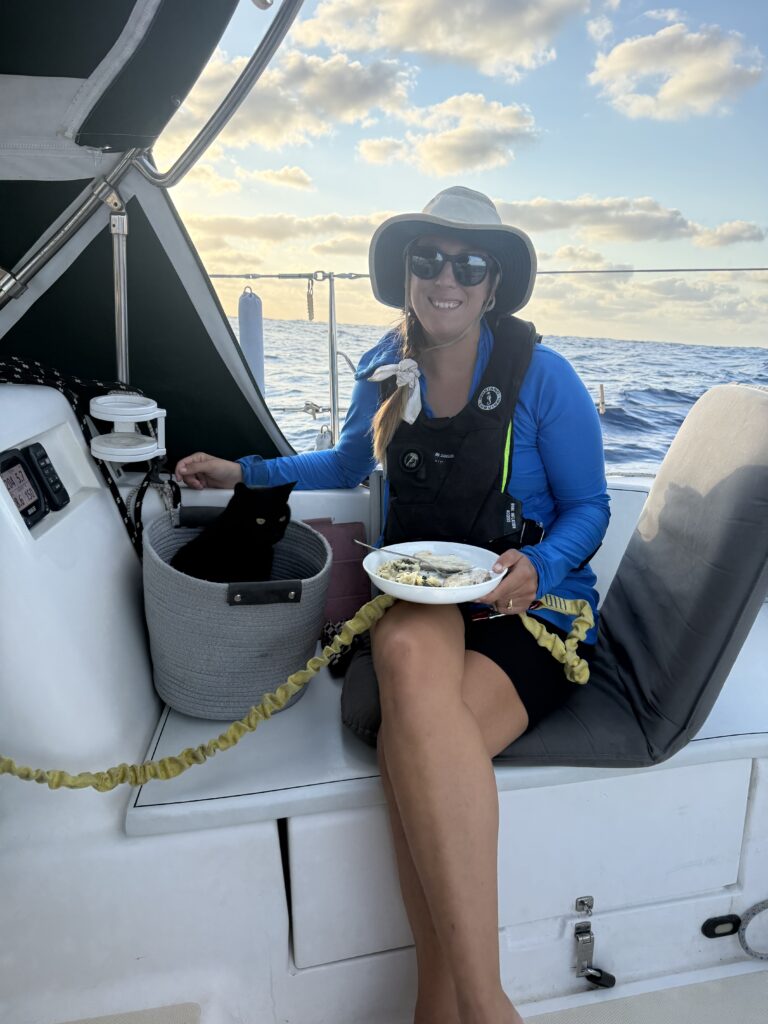
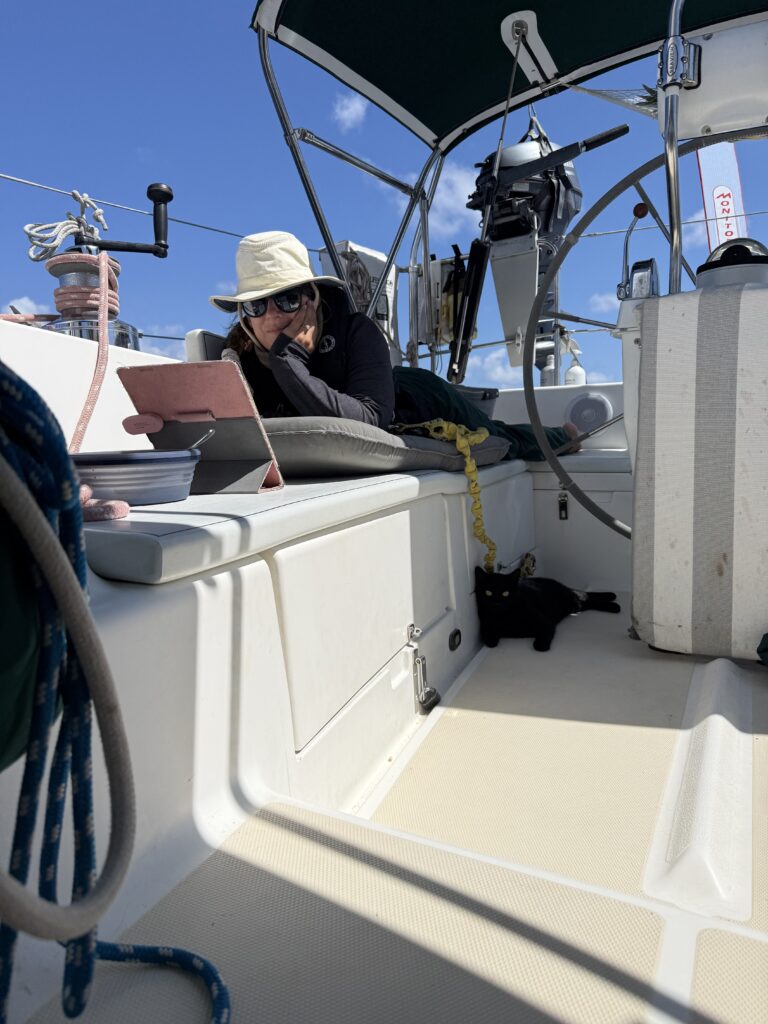
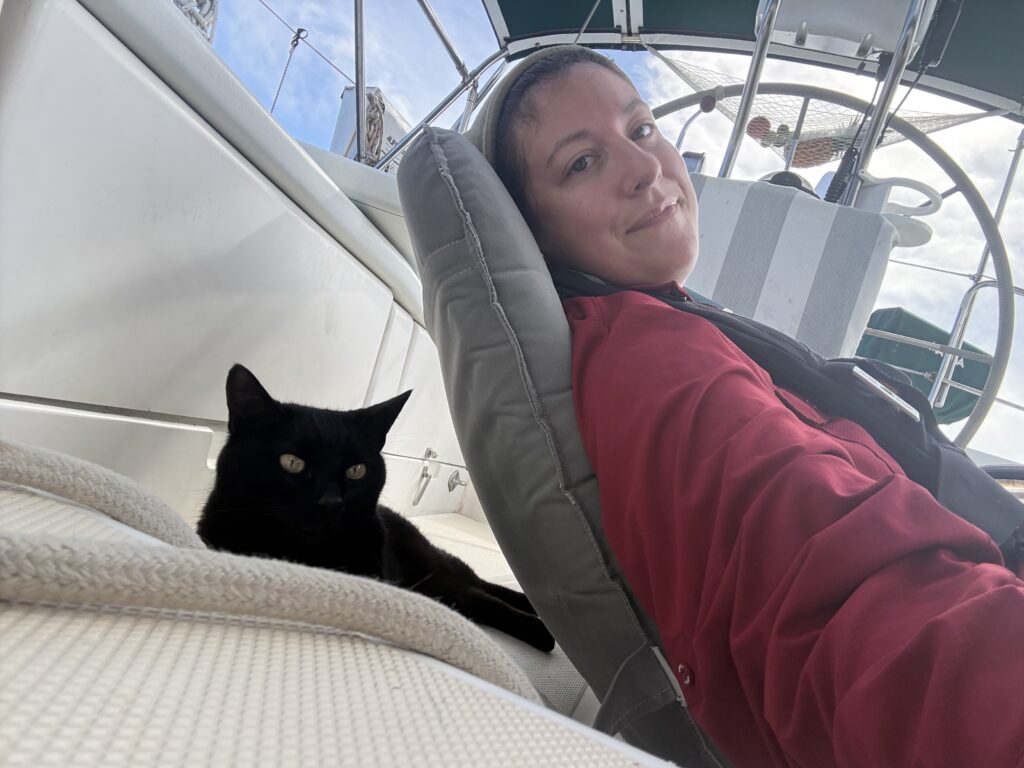
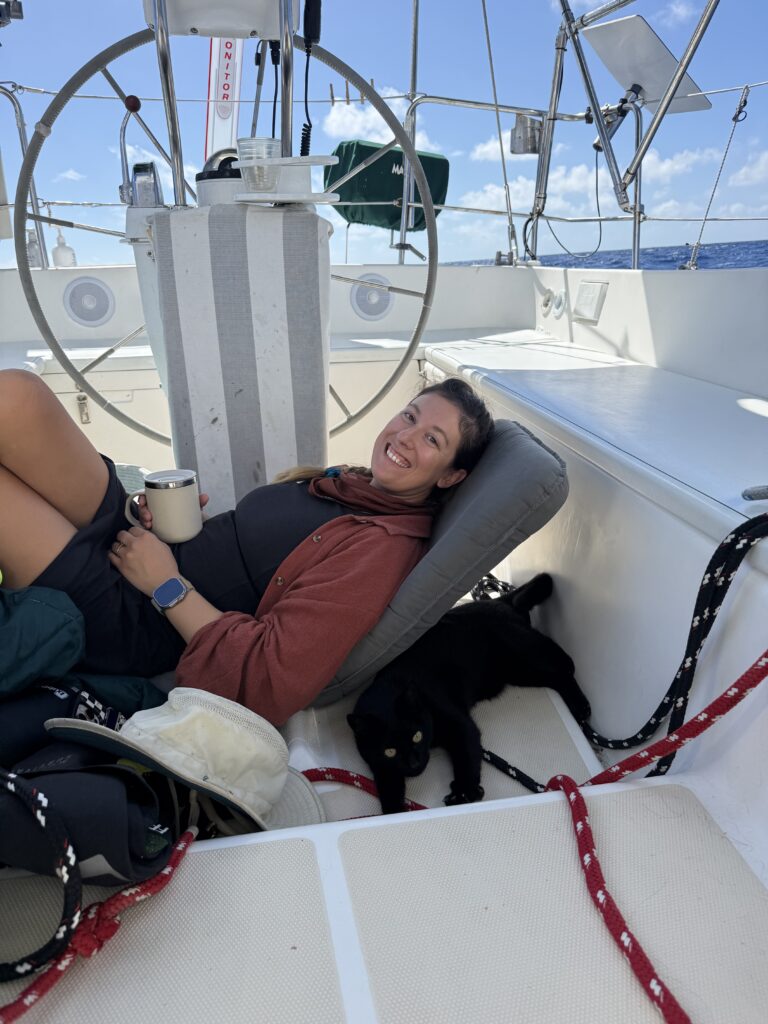
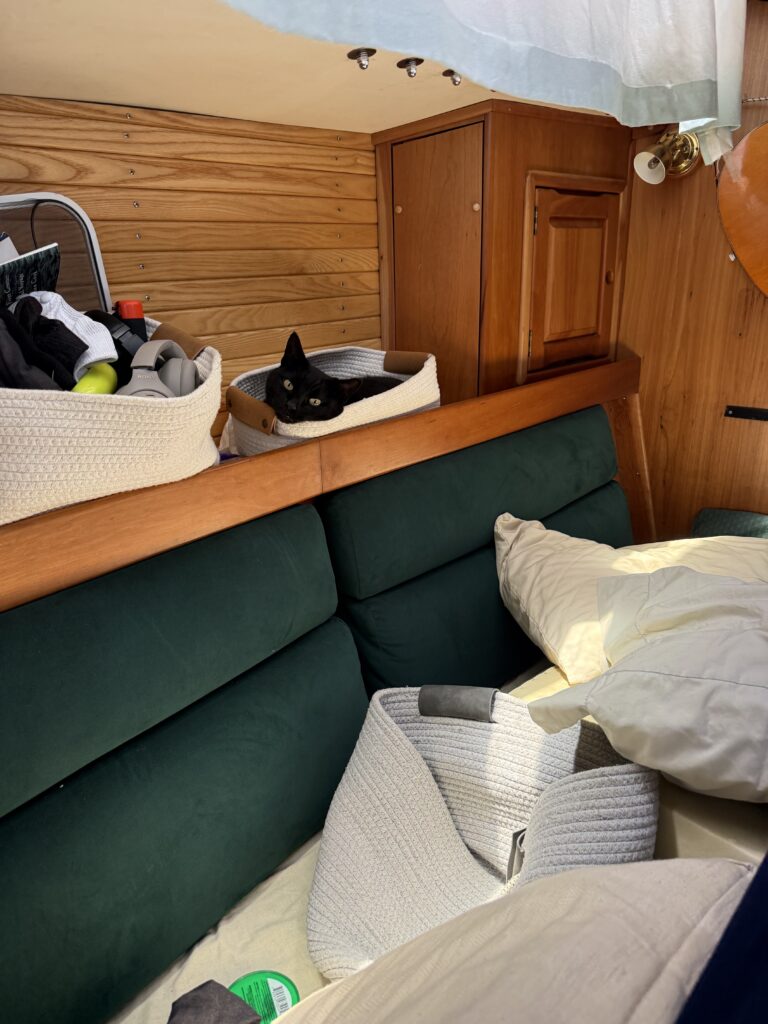
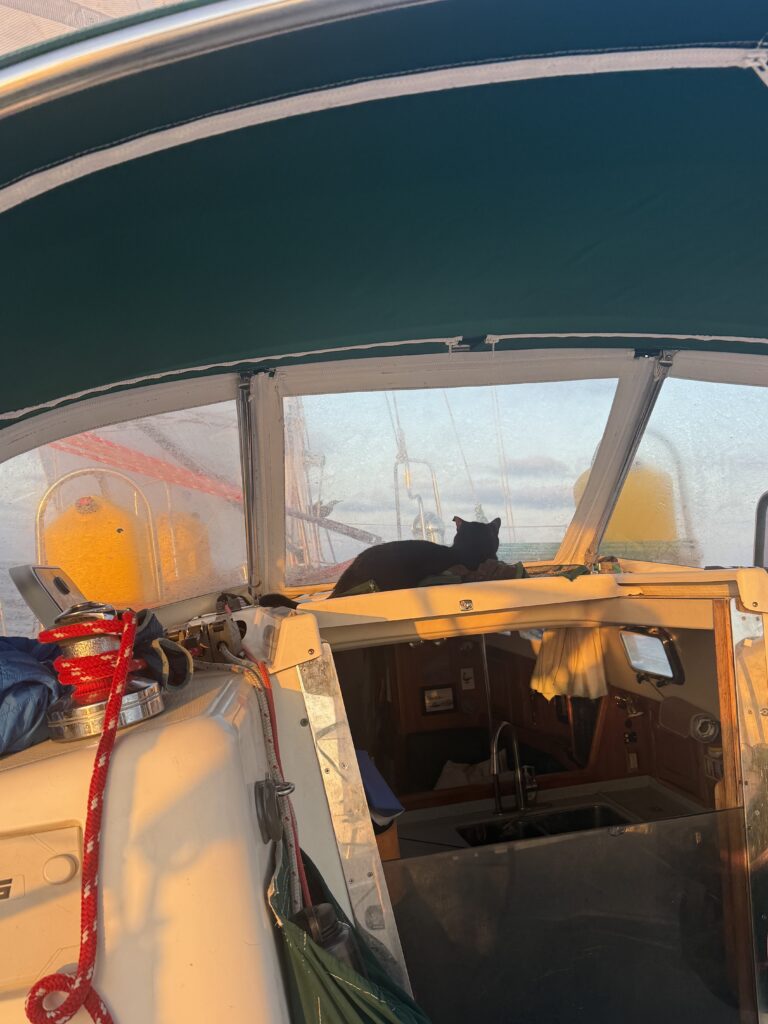
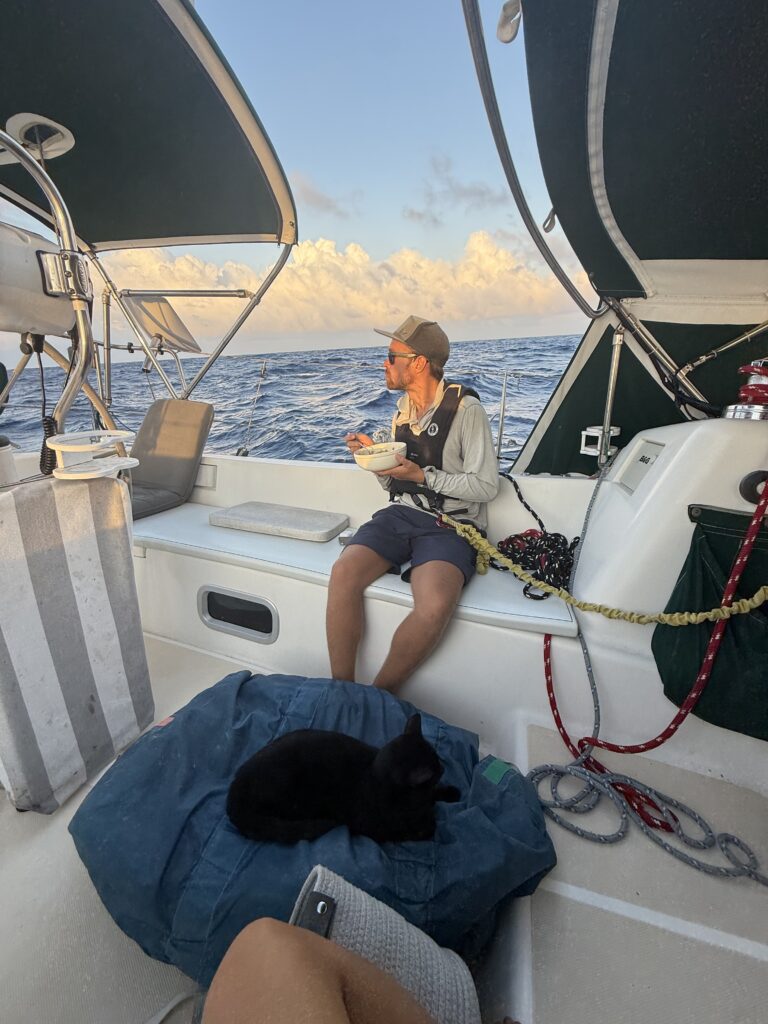
After nearly 48 hours of light air and frustration, the southern trades finally reappeared. We hoisted sail and put Marty back to work! The final four days felt like a drag race. We surfed our way west under steady trades while Discovery continued setting mileage records. On our best day, we covered 185 miles in 24 hours. Meanwhile, Loops had quietly become a seasoned passagemaker. We’ve been so pleasantly surprised with our little sailor kitty. He’s using his litter box at 30 degrees, sleeps through sail changes, and has developed a surprisingly accurate understanding of conditions. Under 10 knots he’s sprinting laps around the cockpit, usually right after visiting the litter box. Over 12 knots he disappears below deck and wedges himself somewhere mysterious.
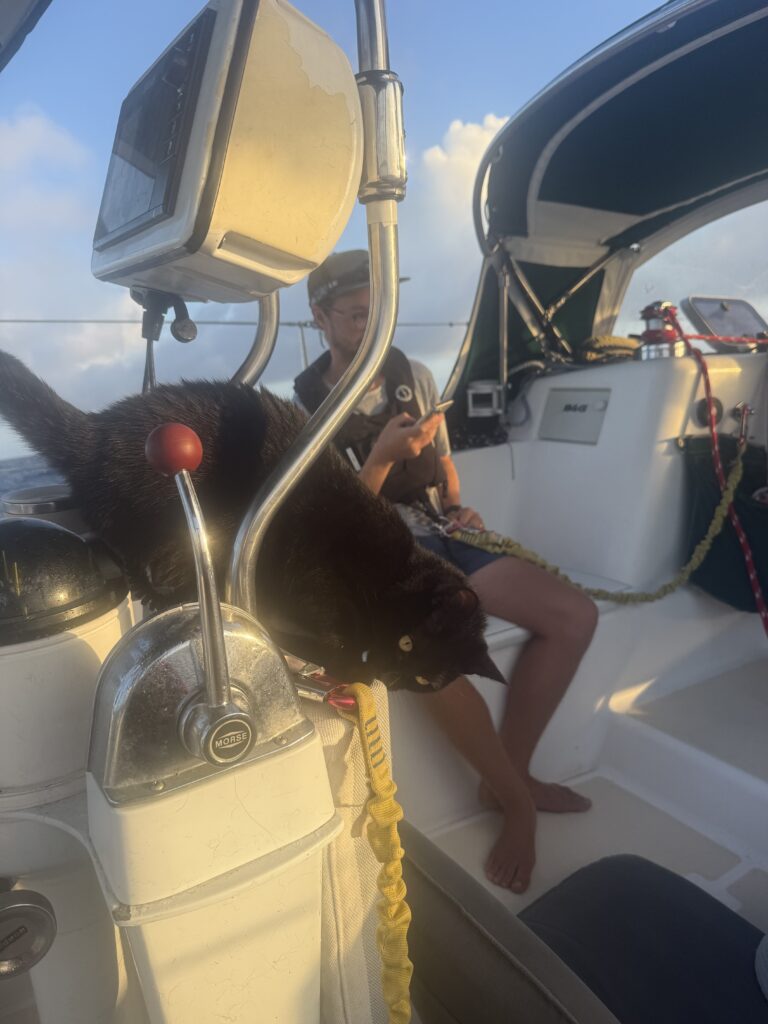
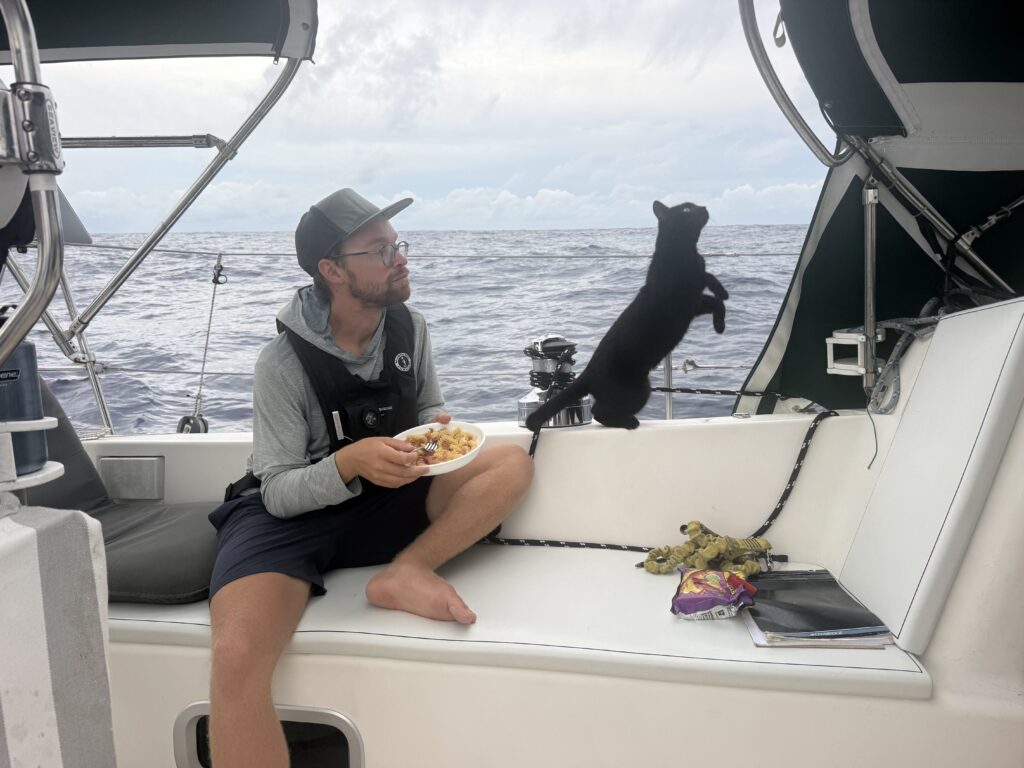
e in the calm conditions!
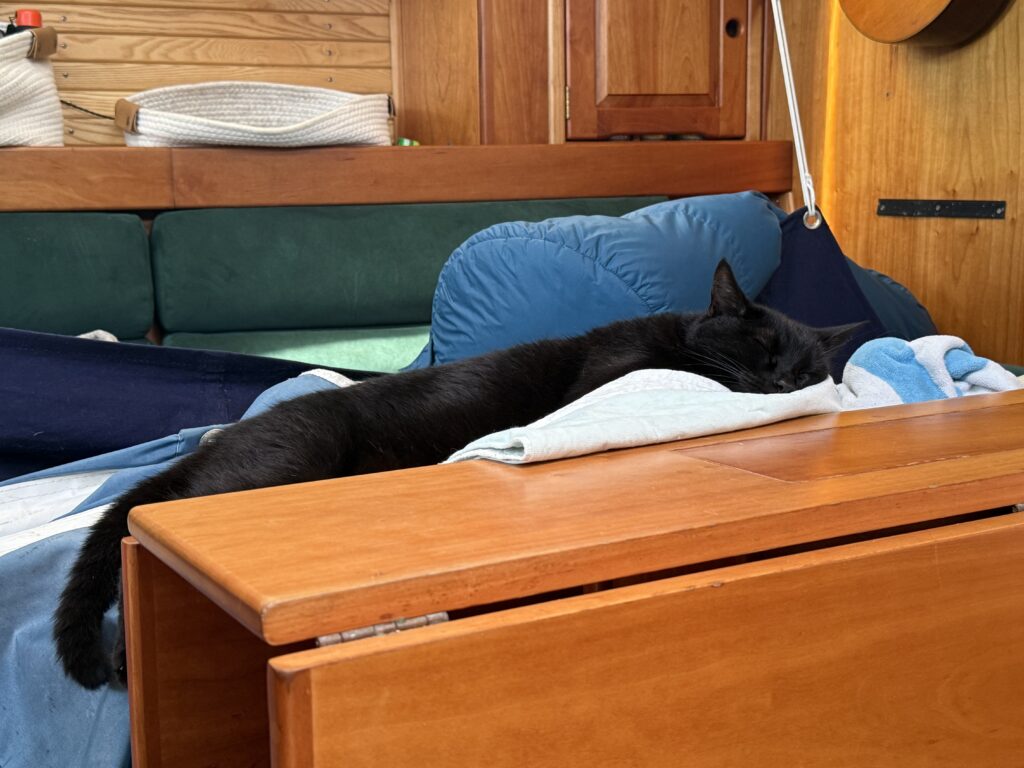
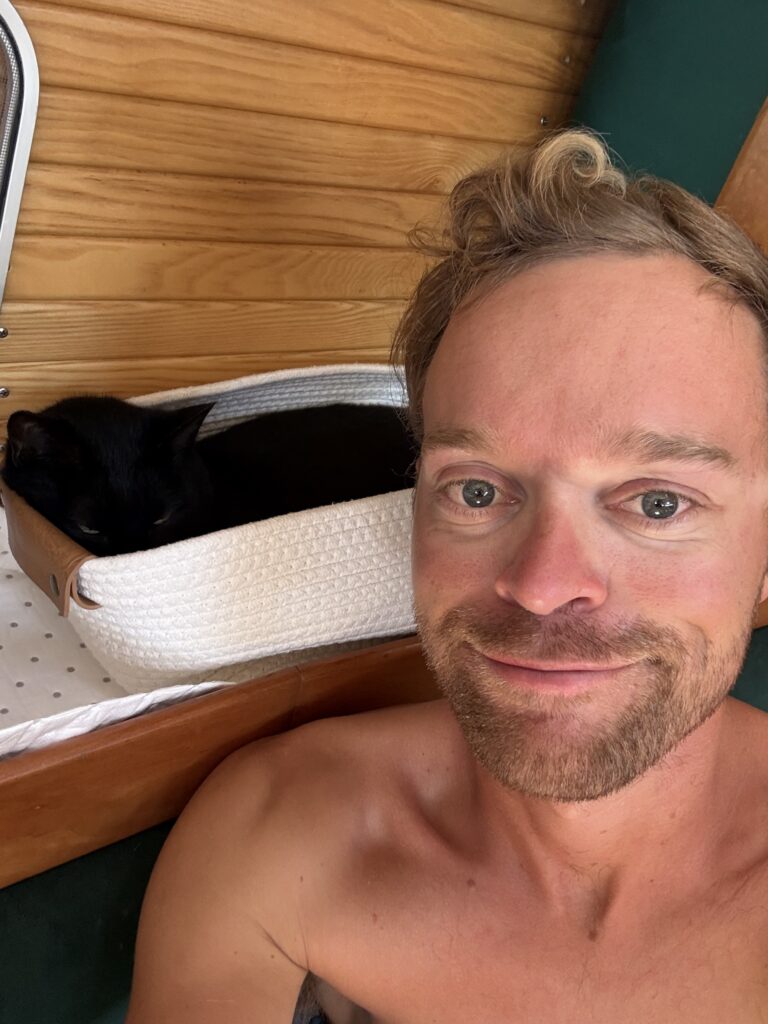
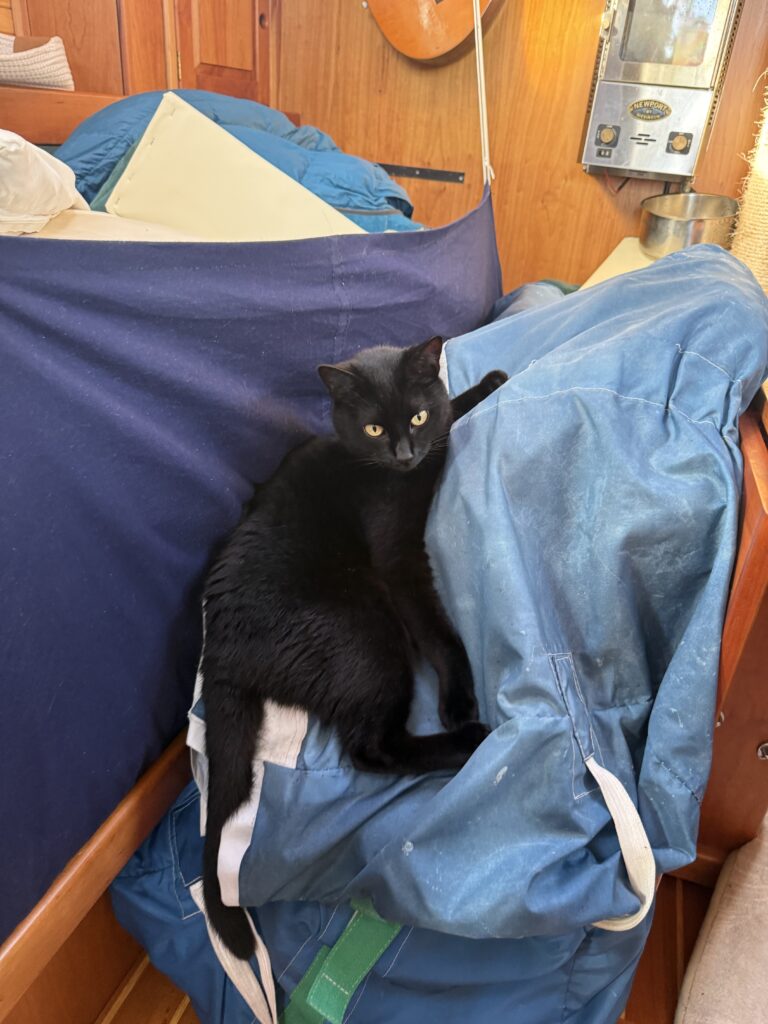
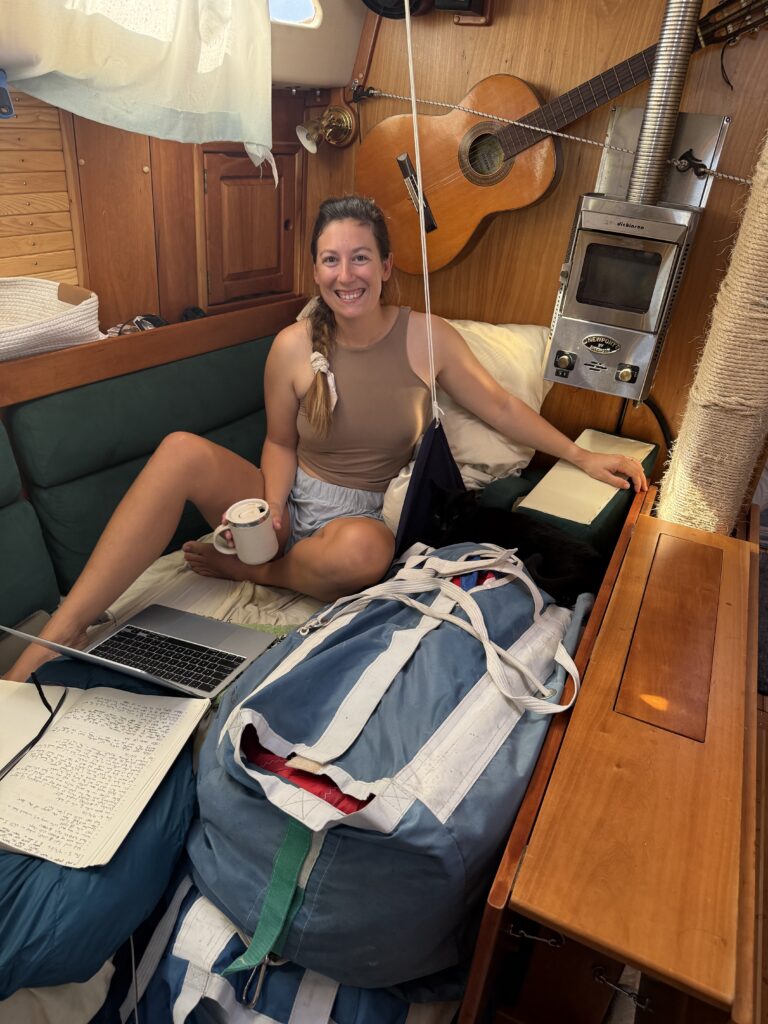
The boat itself was beginning to show signs of eighteen straight days at sea. The cockpit and galley remained reasonably shipshape, but the rest of the cabin was slowly losing the battle. Saltwater found its way in through the propane fireplace, clothes were scattered about, and everything carried that damp, salty, slightly sweaty feel of passage life. Our final surviving piece of fresh fruit, a pineapple, met its end somewhere around Day 15.
For 18.5 days our world was reduced to Discovery, weather forecasts, fish, Survivor, reading the Realm of the Elderlings, watching waves roll by, and laughing at Loops during watch. To everyone’s relief, both aboard and on land, Discovery did not lead us into the depths of the Pacific. Instead, we navigated the largest stretch of open water on earth, and it’s still only halfway across the ocean.
Quick Passage Stats
Elapsed time: 18 days 9 hours
Total motoring time: 14 hours
Daily average: 160 NM
Best 24 hours: 185 NM
Wahoo dinners: 6 nights
Starlink data usage: 120 GB
Black cat morale: unwavering
Seasickness: none

7 comments
Awesome log. I love reading about your adventure. Did Loops get some wahoo?
Loops is consistently unimpressed with our catches. We’ve met other boat cats that go wild for skipjack tuna (essentially cat food). Alas, Loops was raised a city boy. Ice cream & dry food only.
You guys are amazing! We are loving reading about all your adventures!
Great to hear from you Alison! Hope you all are doing well and enjoying the Salish Sea this summer.
That’s a nice wahoo! Tasty, right?
Delicious!
Love it!!!!!