We’ve spent the last two months prepping the boat for our crossing to the Marquesas Islands, with a healthy amount of fun woven in between.
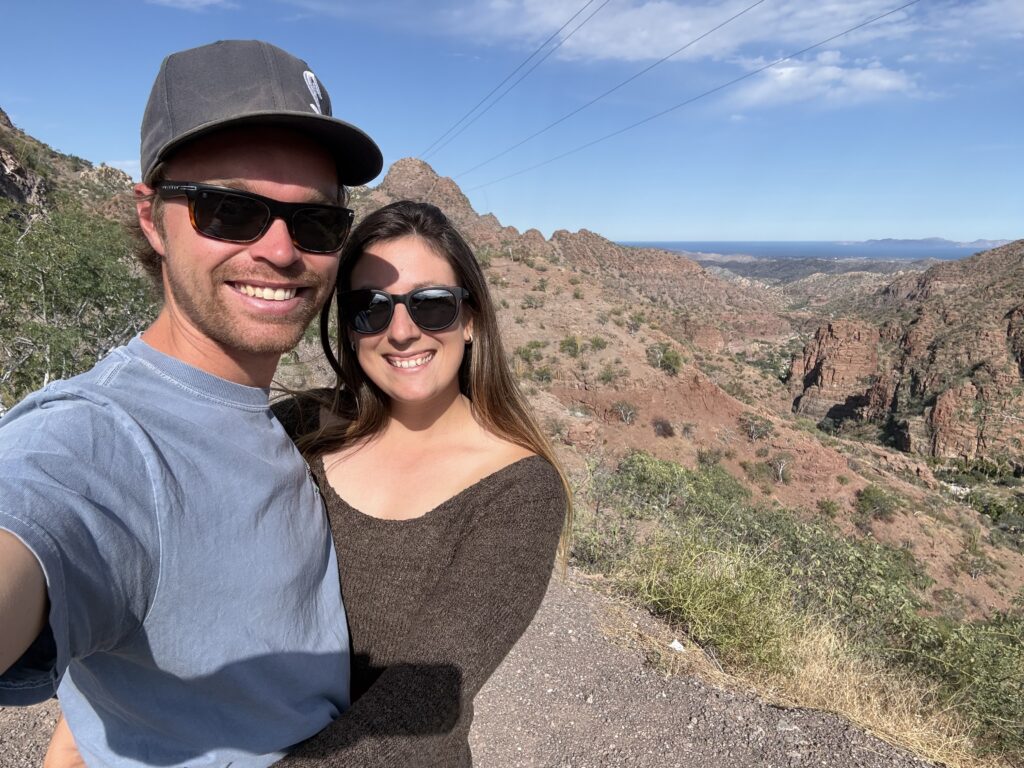
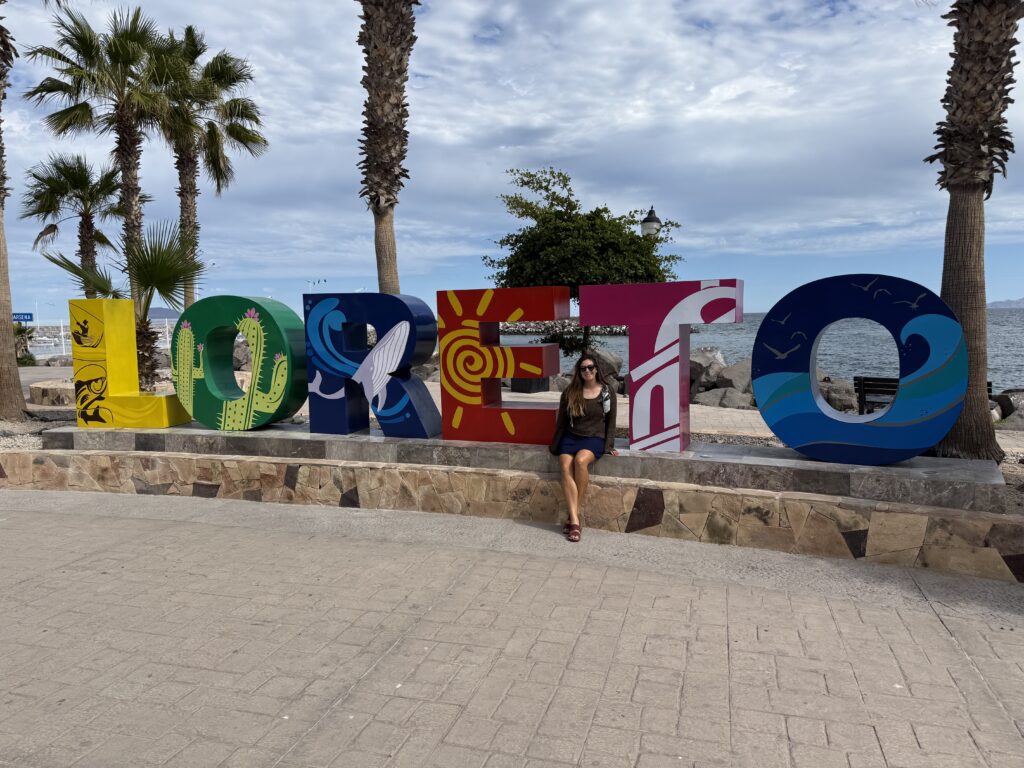
It started in Puerto Escondido, where we hauled out for eight days. During that time, we had access to tap water but couldn’t drain anything, so food prep and dishes became a daily puzzle. Luckily, there was a small grocery in the marina, so we climbed down our 15-foot ladder to replenish ourselves with microwave ramen, Clif Bars, chips, and canned refried beans. Chi Chi (Romeo) and Christopher took good care of us here. There’s not a lot going on in Puerto Escondido, so we rented a car and explored Loreto as well as two canyons further inland, Canyon Mesquite, and Canyon Tabor. These turned out to be an unexpected highlight of the stop. We navigated narrow slot canyons through waist-deep water and scrambled over boulders that eventually opened into hidden swimming holes.


Despite the canyon adventures, we were eager to move on. The moment the work was done, we splashed back into the water, fueled up, and headed straight for the mainland. The wind looked light, and Mason had a slight cold, but we were just happy to be bobbing again instead of stuck on the hard. The bioluminescence on this passage was spectacular and we knew we were close to arrival when a boobie hitched a ride for our final shift.
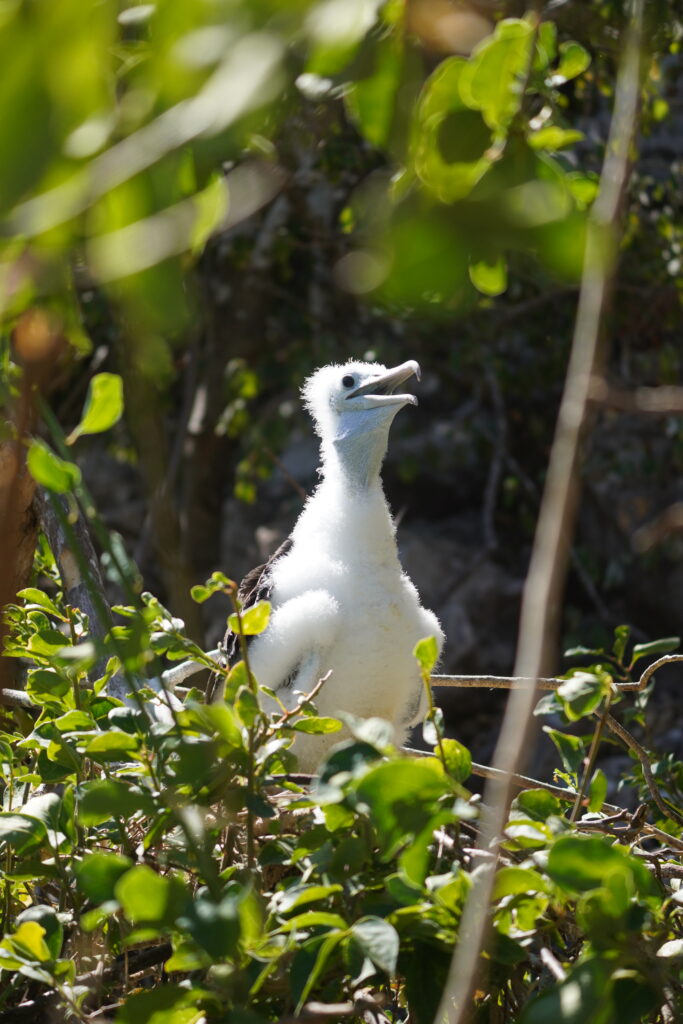
We arrived three nights after leaving Baja onto on Isla Isabel, a teeny volcanic island that is a nesting sanctuary for multiple species including Frigates and Blue footed Boobies. All of us, but especially Loops, was in awe of the number of birds swarming the skies and diving all around us. The water temperature jumped over ten degrees from the Sea of Cortez (67 → 78), so for the first time in a while, we dove in with just bathing suits instead of our 4/3s. This felt like a true gem. We swam through underwater arches and hiked among the frigate and booby nesting sites, stepping carefully as they whistled warnings at us.




From there, we continued toward Banderas Bay, where we planned to spend the next month preparing for the crossing. When we first left Seattle, we had a number of repairs (many of them, memorably, with my mom onboard), but since our starter motor failed in BC last June, nothing major had gone wrong. As we approached the Mexico mainland, it seems our luck was running out. The water maker broke, the boom gooseneck disconnected from the mast (in light winds thankfully), the dinghy started leaking water, and our fresh water pump started cycling which indicated a leak in the hose line. Oh also, we had 4 friends from college staying on board for 4 nights.


Mason suddenly found himself outnumbered when four of my college roommates touched down in Puerto Vallarta and moved aboard Discovery. He adjusted quickly to vacation mode: tarot cards to set the intention for the day, coconuts and piña coladas in beach chairs, hikes to waterfalls, lots of card games, texture appreciation (from pottery to calluses), and plenty of wildlife. Here’s Annie’s take on the wildlife encounters:
Colloquially, an ‘encounter’ is vague–it demands context. “I encountered my ex last night at the wedding” is a cliffhanger, not a complete story. This rule notably applies when it comes to encounters with wildlife. If you found yourself a stone’s throw away from a lion, we could only hope it was because of money well spent. Whether amiable or hostile, here are the land and sea encounters we had in Mexico worth writing home about:
A. Encounter: A chance or accidental meeting
Here, an encounter suggests a seemingly-harmless, possibly-kismet meeting. We were lucky to have many of this variety. Before arriving, Third Mate Amy disclosed important information regarding our trip: there would be dogs. To call them strays feels like a misdirect–these gods are living the dog damn dream. Insomuch that I firmly believe when dogs die, they go to Jalisco. Notable encounters include Gary from Yelapa and Cookies and Cream from San Pancho.
Gary found us on the beach when we needed him most: fighting for our lives from seasickness, constipation, and scopolamine patch-induced visual impairment and dry mouth. He joined us again the following day for some of our out-and-back waterfall hike. Like any good sheppard, he provided course-correction to the real trailhead before leaving us for another group of gringos in need. While it stung watching Gary walk away, cojones and all, we all agreed they probably came prepared with snacks. Muchas, muchas gracias a Gary por mostrarnos Yelapa.


Later in the trip, we were able to hold up our end of the human-canine symbiotic bargain when we met Cookies and Cream–a duo in ostensible need of some TLC. Many dogs in San Pancho move freely from beach, to shade, back to beach. These two however had a more permanent home on the corner near our airbnb. We learned they had been dropped off a few weeks prior and were looking for a new home. Amy and I became immediately attached–while she tended to Cream, I took to Cookie. She bought kibble and we spent mealtime with them twice daily. As the ancient proverb says, you can take the dog out of the mom but you can’t take the dog mom out of the dog mom (kapeesh?). On our last day, Amy also bought baby wipes and gave them each a bath. I’m certain their clean coats enticed potential adopters. When the Chicago team left for the airport, Cream stood in the street blocking passage and wagging his tail as if he were saying see you again someday.
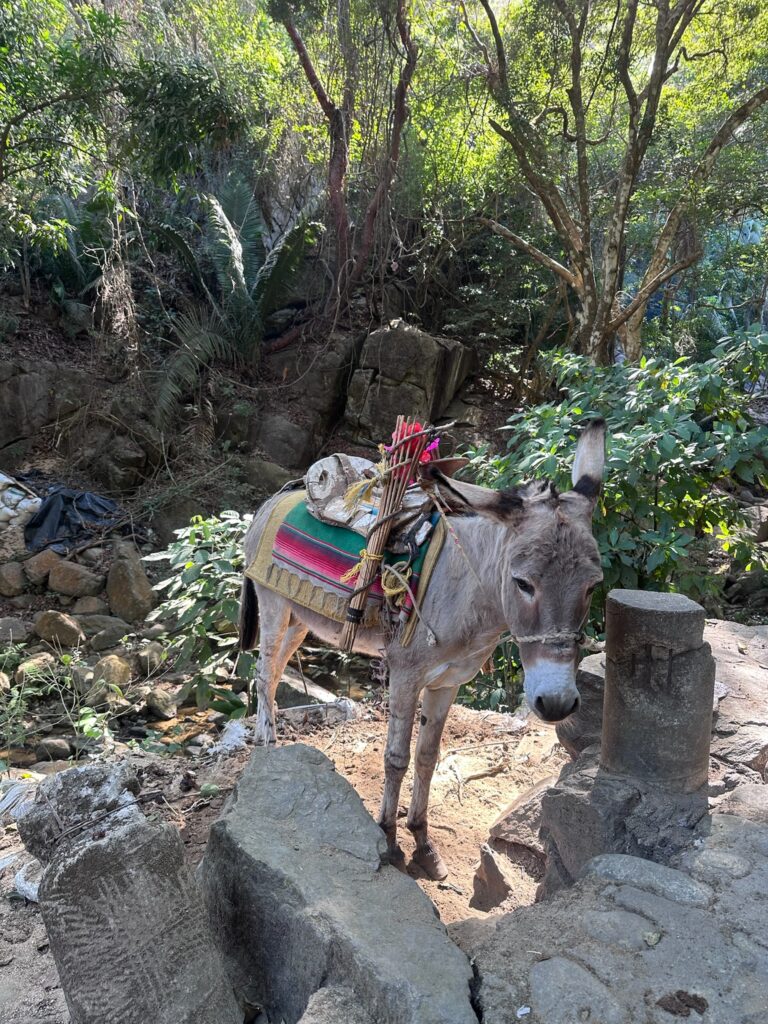
Outside of the Canis genus, we had run-ins with working horses and donkeys, blink-and-you’ll-miss-them lizards, a practically newborn calf, a family of chickens seemingly co-habitating with a chihuahua, the biggest bat I’ve ever seen, one tiny fish Amy caught and released, and a squirrel who lived an extremely comfortable life as a permanent resident of our airbnb.



B. Encounter: A meeting between hostile factions : a sudden often violent clash
Sometimes ‘encounter’ takes on new, inauspicious meaning. No, I’m not talking about the cartel war that erupted just miles away from us. Here, I’m referring to the time we ran right into a humpback whale.
Here’s Helen on the matter:
We are mid-motor heading from La Cruz across Banderas Bay to Yelapa. In a wise foreshadowing moment, Mason warned us that during this season the risk of running into a humpback whale is high in this bay— a fact we synthesized as more amusing than harrowing at the time. No one thinks you will ACTUALLY run into a whale. Annie and Amy are napping soundly on the bow while I am standing at the very edge, gazing into the water below, mid taco-margarita daydream. I am brazenly derailed from my trance by the sight of a blowhole erupting from the water 10 feet in front of us. After a stunned second I managed to holler “WHALE!! CUT ENGINE!” Amy, the always-practical girly, immediately jolted up from sleep and hustled towards the stern with great purpose. Annie, as mystified by the scenario as I was, sat up with an awe-struck look in her eyes. And I, quite foolishly in retrospect, stayed put in my vulnerable position to witness what would happen next: the gigantic tail fin of the whale exited the water and slapped the bow, causing a thunderous clap to reverberate across the Discovery. What proceeded afterwards was a moment of baffled concern: Is the whale ok? Is the boat ok??? Is Lane and Mason’s great adventure going to be curtailed because of damage from a whale collision? Reassuringly, we watched mama whale and her baby resurface a few more times as they swam away from us. We can only hope that for her this encounter was the equivalent of stubbing your toe or accidentally knocking your head on the corner of an open cabinet — bothersome but benign. And colliding with a multi-ton animal proved to be child’s play for the Discovery — she was completely intact and continued to thrive on her Mexican odyssey. For all of us, this ephemeral encounter was a humbling reminder to not rule out ANY outlandish scenario when out to sea. Anything goes!
C. Encounter: A coming into the vicinity of a celestial body
Lastly, while this doesn’t necessarily qualify as wildlife, we may have encountered our ancestors. Protecting us, some better than others, from multiple (bodily) forms of harm. Syd’s ancestors have some explaining to do…maybe even Helen’s. Mine likely had the calendar dates mixed up. Amy’s consistently came through. Lane and Mason’s knew they could handle it. Regardless, I think we all could feel Briggs’ presence onboard. He helped raise a pretty badass pirate…and plumber.
Now back to Lane!
We thought the humpback would be the most life threatening event of the trip, not so! Halfway through their stay, things took another turn. News broke that Mexican drug lord, “El Mencho,” had been killed. Not long after, roadways around Puerto Vallarta were overtaken by burning cars in cartel-led protests. It was a frightening, disorienting moment trying to piece together what was actually happening from snippets of news and word of mouth. Some of our best information came from a crass drunk named Mark. After giving us a thorough update on PV, he launched into a completely unfiltered monologue about his five girlfriends: one models, one married, and one with boobs the size of hydrated cantalopes. He even bought a round of shots and toasted:
“To wars and revolution, to whores and prostitution, to southern boys who love to fight and southern girls who sleep all night” Annie quickly firing back, “sounds like all those Southern folk are gay, Mark.” We burst out laughing and for once, he didn’t have a response.


The whole exchange felt surreal. The bizarre, over-the-top character pops into a situation that felt anything but funny. With airlines and roads temporarily shut down, we felt fortunate to have mobility that many tourists and locals did not. We talked through our options (including a potential sail to Mazatlán or Cabo), but after our first night at anchor, we woke up to reassuring news that things were returning to normal around PV.
Once the girls left, we turned back to our growing task list and settled into a new routine anchored off La Cruz de Huanacaxtle. While gear failures are never fun, we were grateful it was all happening somewhere with access to parts, shipping, and resources. Many cruisers stage their Pacific crossings from here for good reason. There are large anchorages, marina access, easy flights, and proximity to big-name stores in Puerto Vallarta (Home Depot and Costco baby!).
The mornings in the anchorage are calm so we work projects (listed below). By afternoon, thermal winds build to 20+ knots, making the boat too rolly for projects, but perfect for getting out on the water. My winging has really progressed here. After 20+ sessions, I’m now landing my foil gybes about 50% of the time and starting to stick a few foot switches. All good practice for the atoll winds ahead. Evenings are for going ashore, running into other cruisers, grabbing street tacos and beers (somehow still just $15 USD for both of us), and hauling 5-gallon water jugs back to the dinghy.


Somewhere between tacos, wing sessions, and hosting friends, we managed to get the boat ready to cross an ocean:
Haul-Out & Hull Work: Bottom paint, hull wax and polish, engine shaft inspection and assessment


Rigging & Sail Systems: Reattached boom gooseneck to mast using heli-coils, developed emergency contingency plan in case of boom dis-attach, repaired hourglass in gennaker, replaced rusted lifelines with Dyneema, installed new jib sheets, inspected and secured mast track screws


Mechanical & Systems: Repaired watermaker (replaced membrane and damaged wiring), Completed full engine and outboard servicing (Engine oil, transmission fluid, fuel filters, impellers), addressed freshwater system leak (cycling pump).


Deck & Hardware Maintenance: Serviced all winches, Re-bedded leaking deck fittings with butyl tape, Waxed deck and cleaned/polished stainless hardware, Extended cockpit shower hose

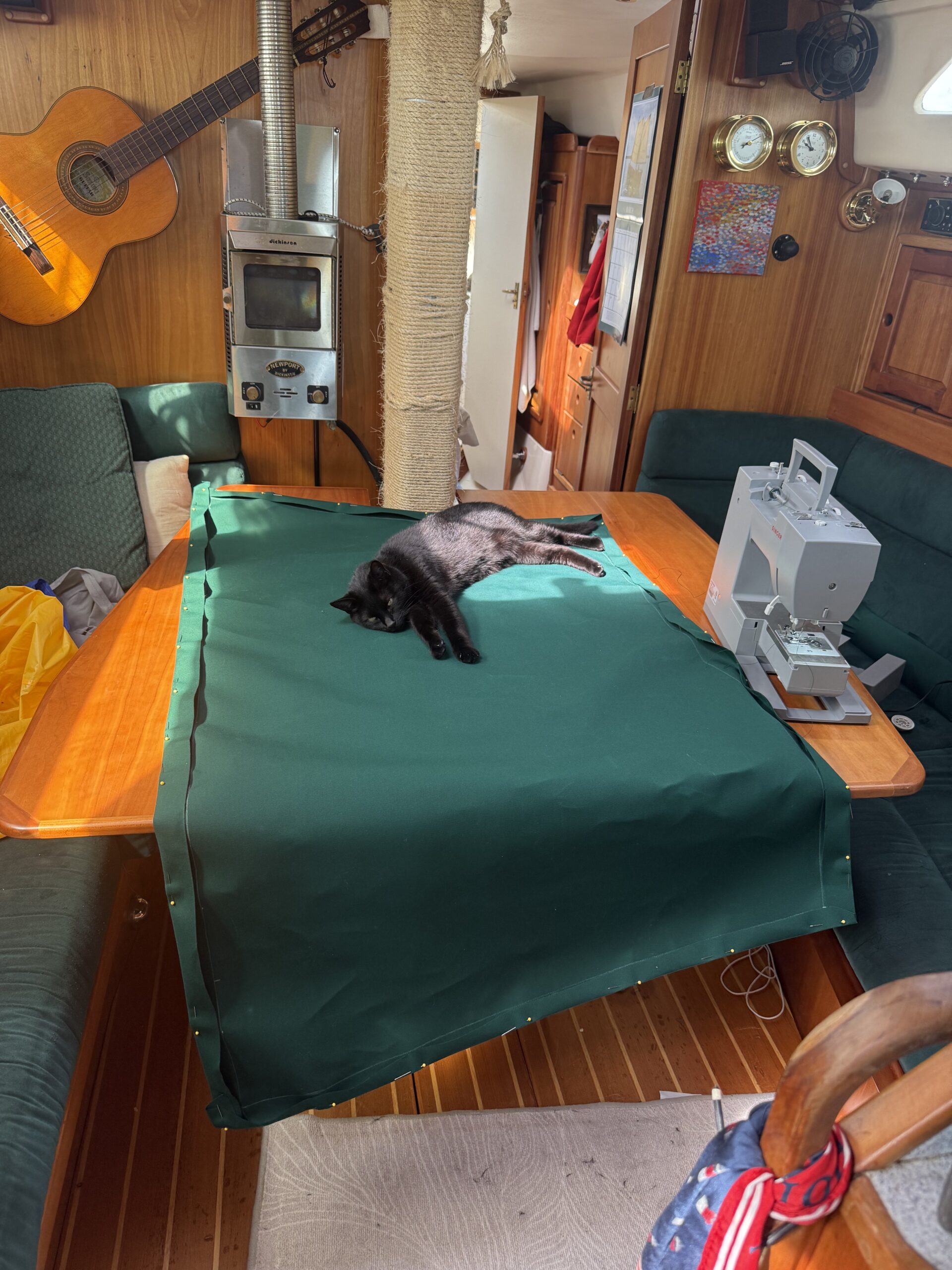
Custom Projects & Fabrication: Built flopper stopper, sewed new main cabin lee cloth, secured dedicated sleeping space for Loops under the table, new trash can

Provisioning for French Polynesia: Researched food availability and built long-term provisioning plan (~8+ months off-grid), Bulk purchased and vacuum-sealed dry goods (25 kg flour, 15 kg oats, 20 kg rice), Organized and stowed provisions beneath floorboards, reviewed and restocked critical spare parts inventory.


Admin & Logistics: Secured French Polynesia Long-Stay Visa, completed ABYC lithium battery inspection, extended insurance for South Pacific navigation, downloaded and verified electronic charts, cleared out of Mexico (port clearance), filed taxes


