On New Year’s Day, we woke at 3 a.m. to an absolute swarm of jejenes (biting no-see-ums). After another hour of tossing about, we pulled anchor in the dark and said goodbye to La Paz. “Feliz Año Nuevo, Puerto Capitanía,” we called out over the radio. We motored forty miles to Isla San Francisco, leaving behind fireworks, sleep deprivation, jejenes, and Mark Zuckerberg’s 400’ yacht and 280’ toy tender in our wake.
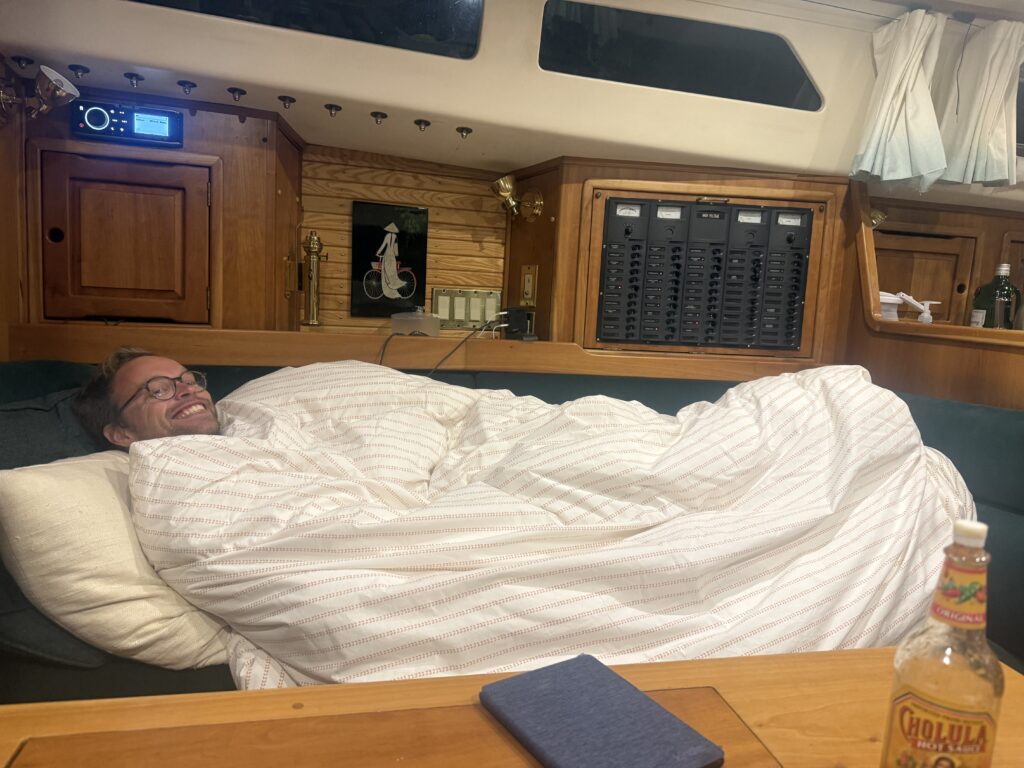
We spent a few days in Isla San Francisco, an idyllic crescent shaped anchorage and eased back into cruising. No timelines on folks to meet, just watching the wind and choosing an anchorage. Life onboard found its rhythm again. Mornings are slow. Mason brings me coffee in bed while I read and he codes away. I started a new book series, Robin Hobb’s Realm of the Elderlings, and promptly got hooked. I just finished the first of five trilogies, which should keep me occupied for a while.


We met a young couple, Neale and Izzy aboard Blue Zulu, who had started their voyage in New Zealand three years ago. They’d sailed north through Vanuatu, Micronesia, Japan, then across through the Aleutians before turning south and tracing the North American coastline, very much like our plan. Unfortunately, they were on the very last stretch of their trip. The days are slower out here, but it felt a sobering to meet someone at the end of their journey. Time & tide wait for no man! I guess I better get cracking on the guitar practice.
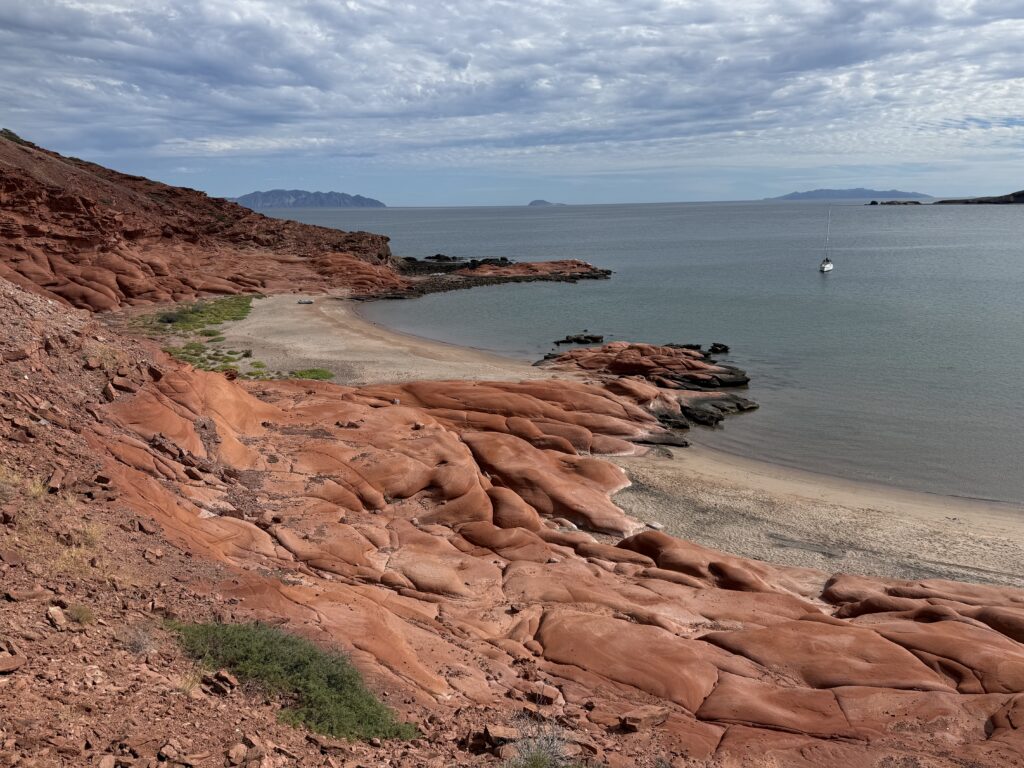
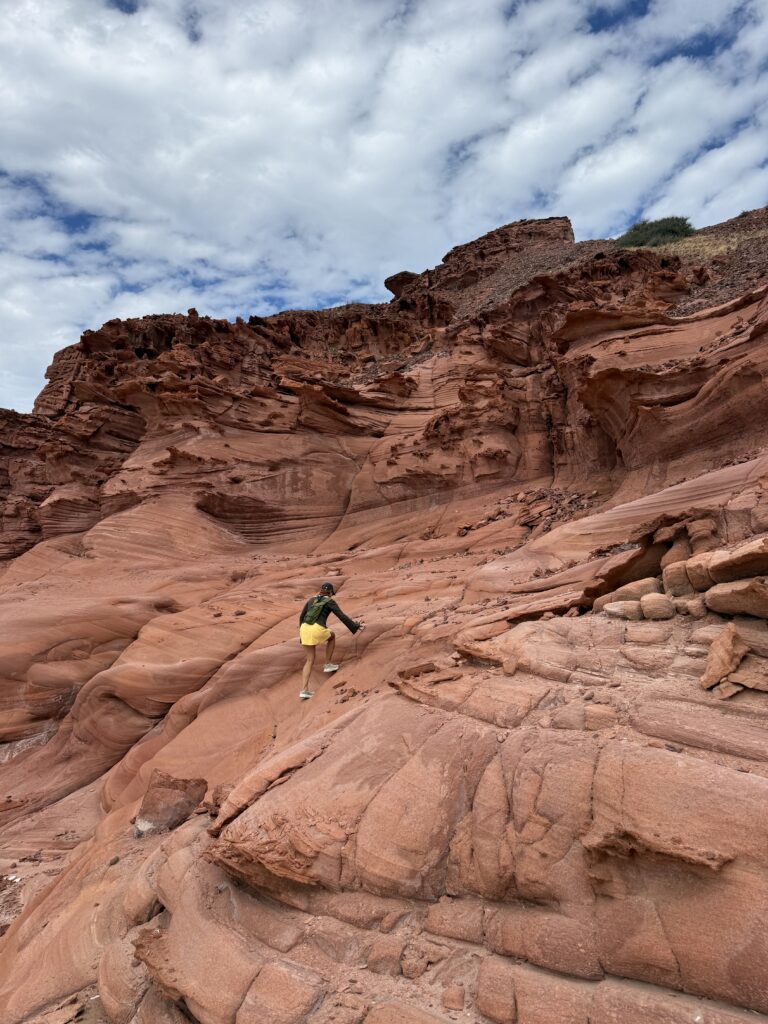
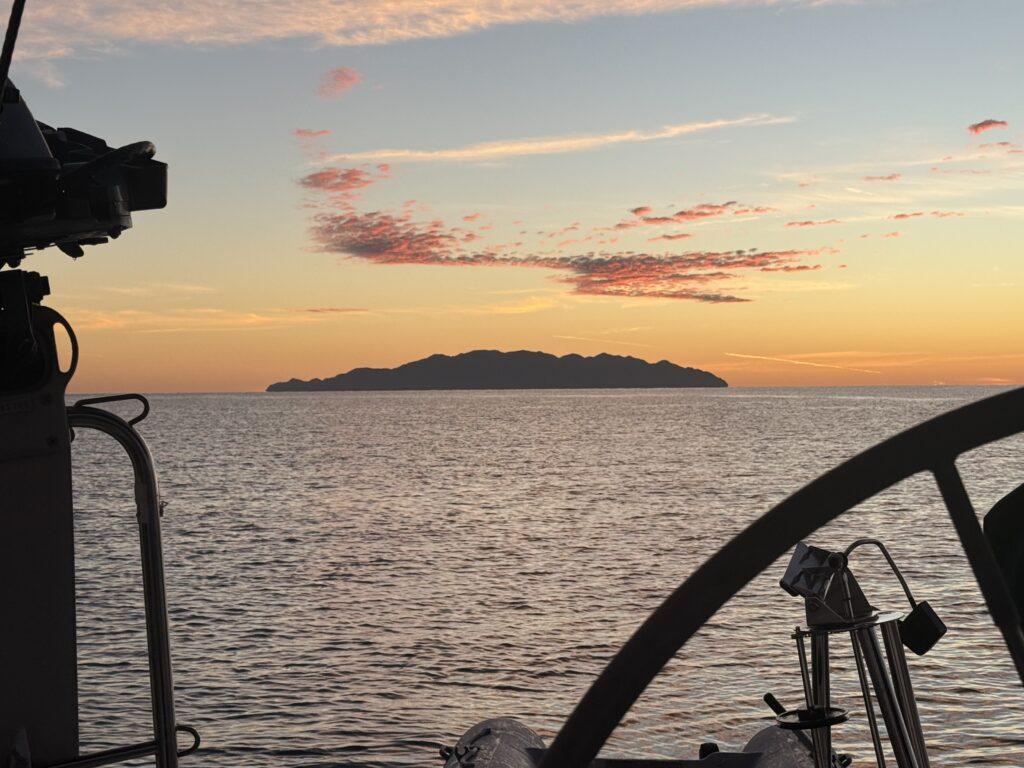
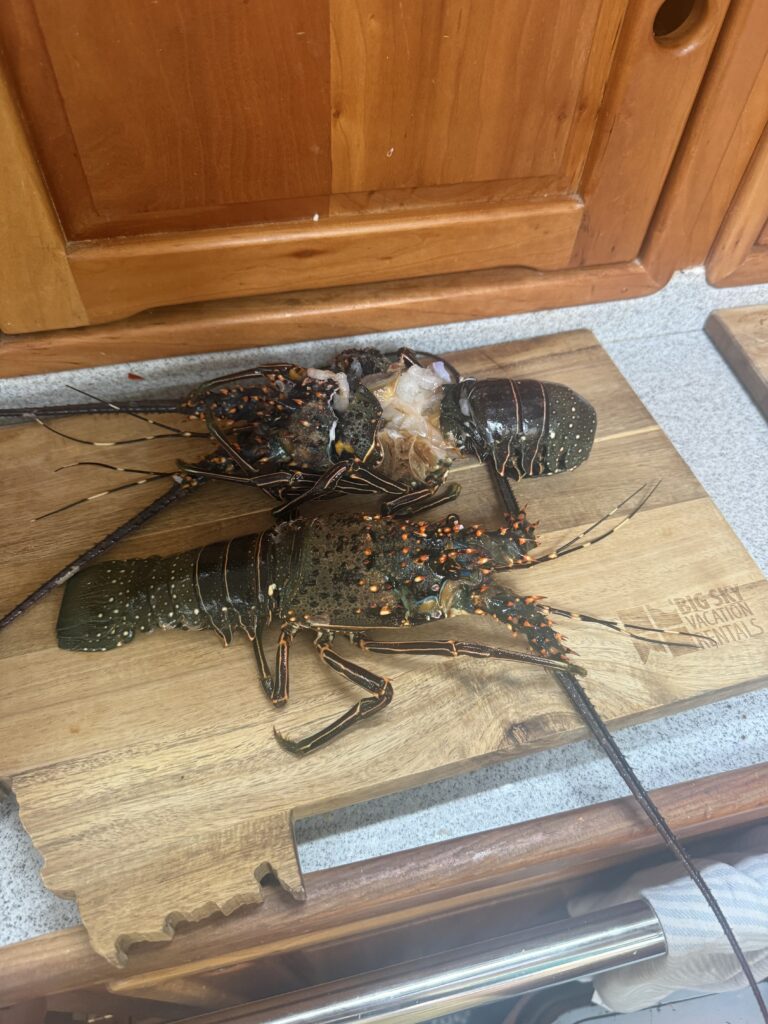
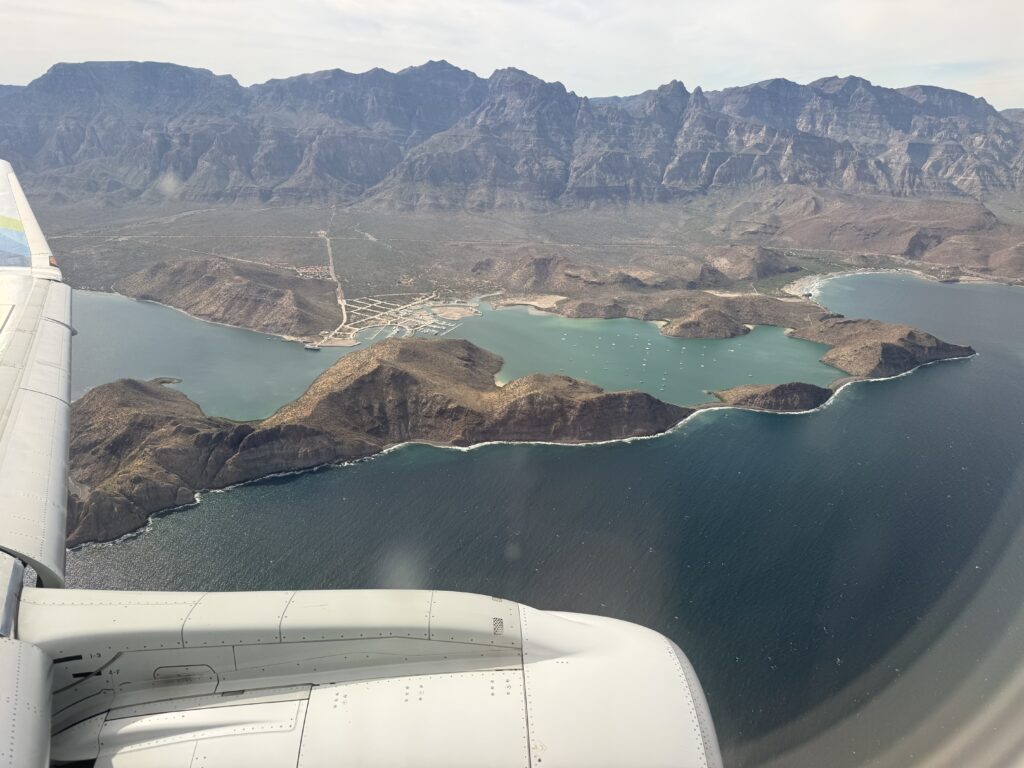
With additional solar panels online, we were motivated to sail more and burn less diesel just to charge batteries. We tacked our way up the Canal de San José to Los Gatos, an anchorage that looked like we’d been dropped into the middle of a red rock desert. We stayed here a couple days rock scrambling and buying lobsters from the locals before moving on.






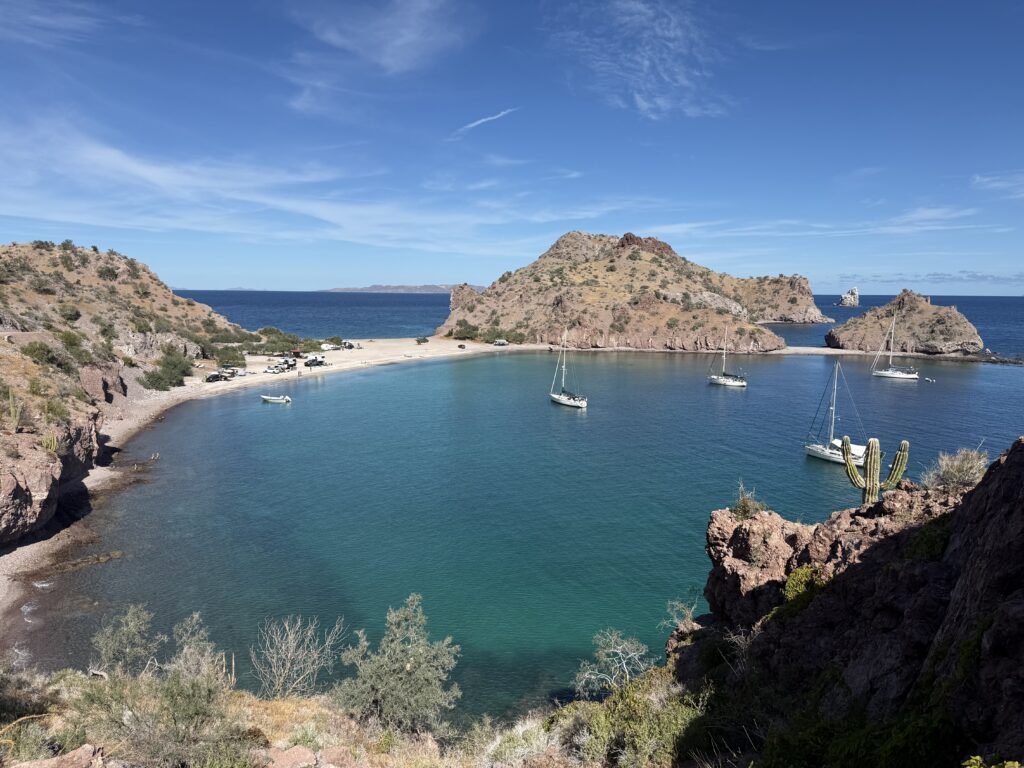
In Agua Verde, our boat life intersected with van life for the first time. We were welcomed into a loose crew of winter Baja campers: Erik and Marissa, Sara and Taylor, Bruce and Beth, and Julie and Monkey. The conversations felt immediately familiar: where are you coming from, where are you going, how much solar do you have, what’s your fresh/gray/black water situation? We traded tours and they marveled at the space inside the boat. Their main limiter to off-grid life was their access to fresh water. We carry 140 gallons and, being the water hogs we are, somehow still burn through it faster than they do with 50. We tapped off their jerry cans to get them a bit further down the road.
The next day, our friends Mike and Stephanie aboard Stella Blue arrived just before El Norte winds filled in. We spent the afternoon winging in big swell, ~2-3′. Mason carved downwind with confidence while Mike and I focused on staying upright. It was a great session, and we all agreed that flat water is for learning.



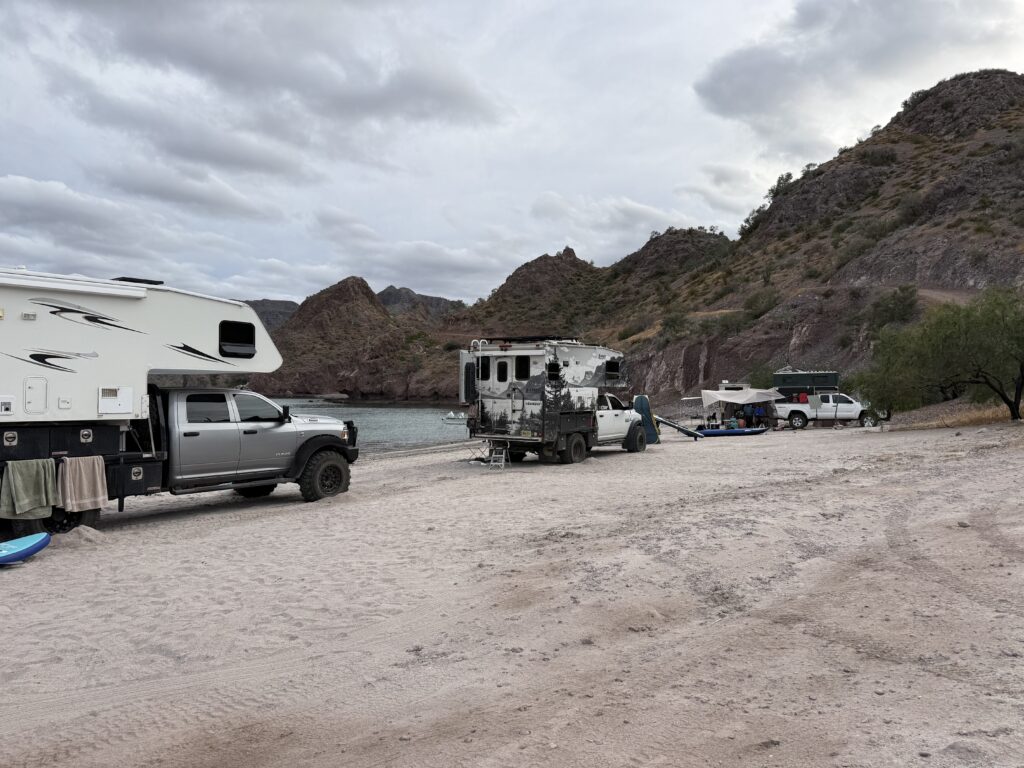
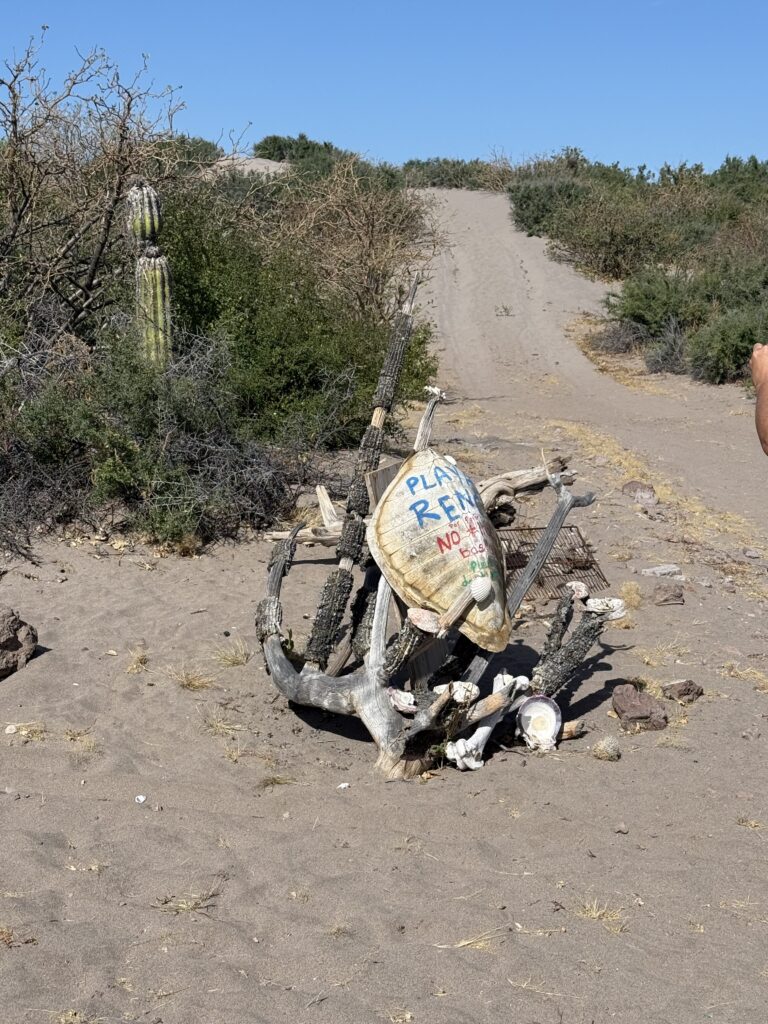
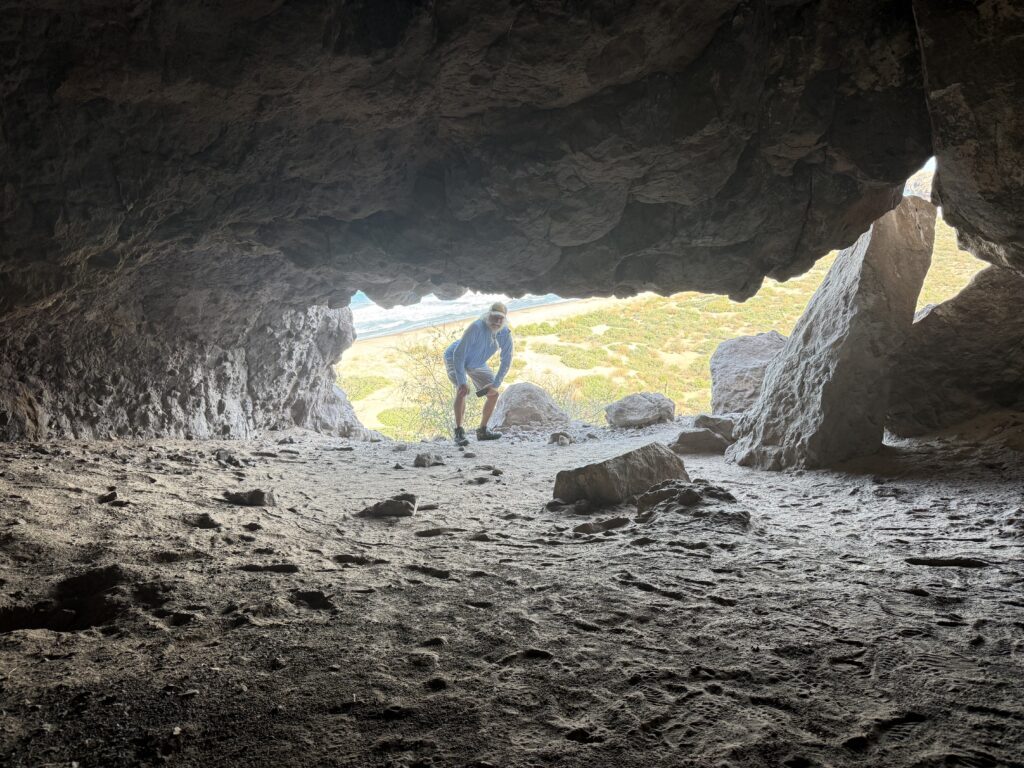
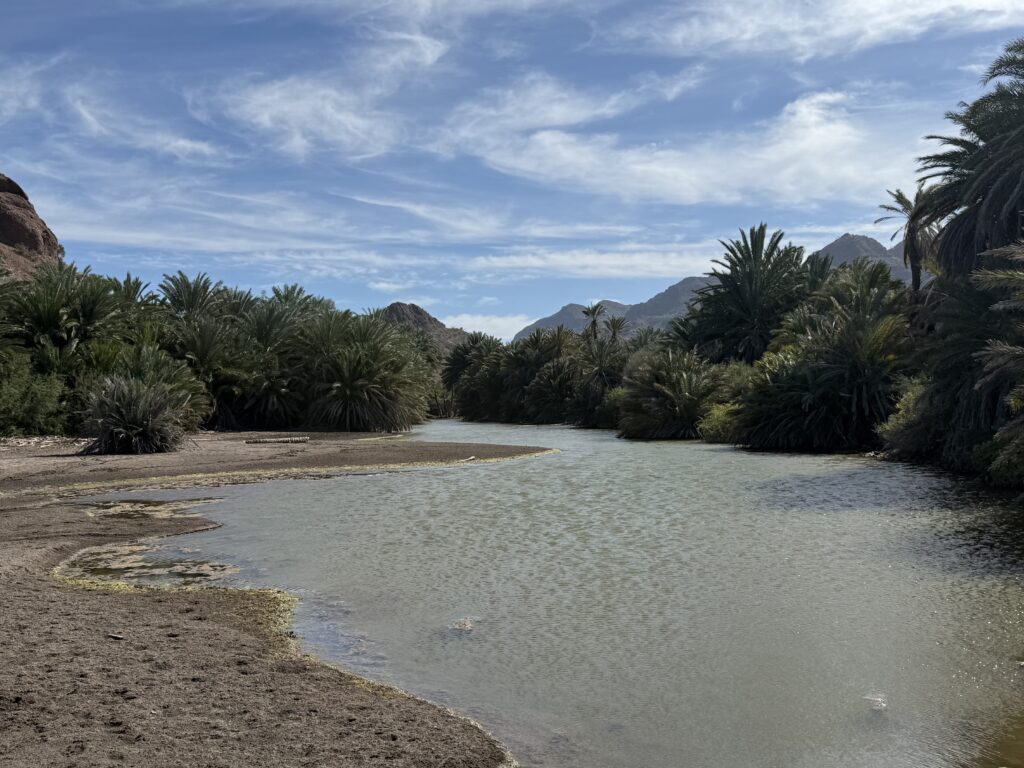
Through the van crew, we also learned about Ted. Ted lives in a cave on the south end of Agua Verde. Naturally, we were intrigued. Erik and Marissa had met him the year before and arranged a five-mile hike to painted caves, led by the cave man himself. Mason opted to wing that day, but I joined the hiking crew, curious to see how this story unfolded.
Ted had lived in the Agua Verde cave for three weeks last year. This year, he planned to stay for three months before driving back north to his other caves in northeast Oregon and near Mount Hood. He’s a polyamorous, Swedish, practicing psychiatrist who hikes back to his van every two weeks to power up Starlink, meet with his eighteen patients, and catch up with his lovers.
In group settings, he was soft-spoken and fairly normal. One-on-one, he drifted into something more… spiritual. But the moment that stuck came later, at a taco stand. There was a shared salsa platter with spoons meant for distribution. Ted, who is not especially clean, fingered the entire platter, dabbed each hot sauce, and licked his grubby hands. Everyone else quietly opted out of salsa that night. I wish Ted well in his year of caves.

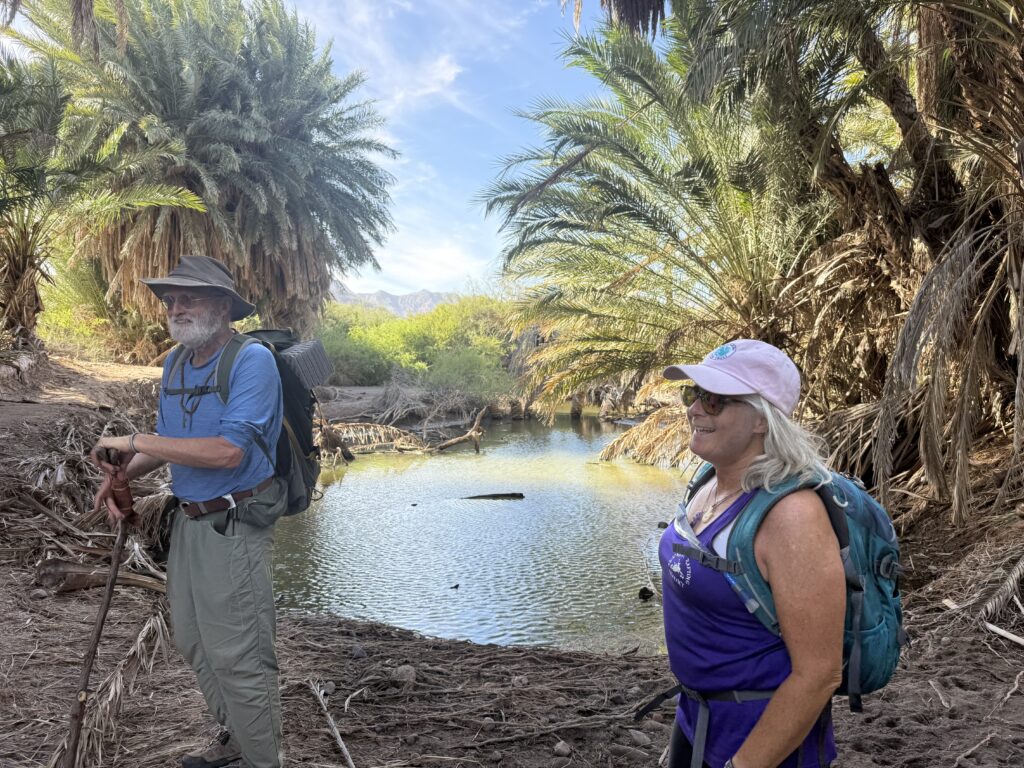

We capped our final night in Agua Verde celebrating Erik’s birthday with delicious snickerdoodle cookies, courtesy of Melissa. Socially saturated and happily exhausted, we said our goodbyes and pointed the boat toward the islands.
El Norte was abating, but the twenty-mile slog to Punta Colorado was steep, square chop. We realized we hadn’t gone upwind since our Alaska days and had forgotten to secure a few things. The pullman berth mattress flung onto the floor and my top-heavy KitchenAid demolished Mason’s SodaStream. A quick reminder that the Sea of Cortez still calls the shots.
The following day, we reefed early and headed for Bahía Salinas, a kiter’s paradise. Strong north winds funnel through a valley straight into the anchorage, creating rare flat water with powerful wind. Because the wind was offshore, I stayed on watch, ready to rescue if anything went sideways.


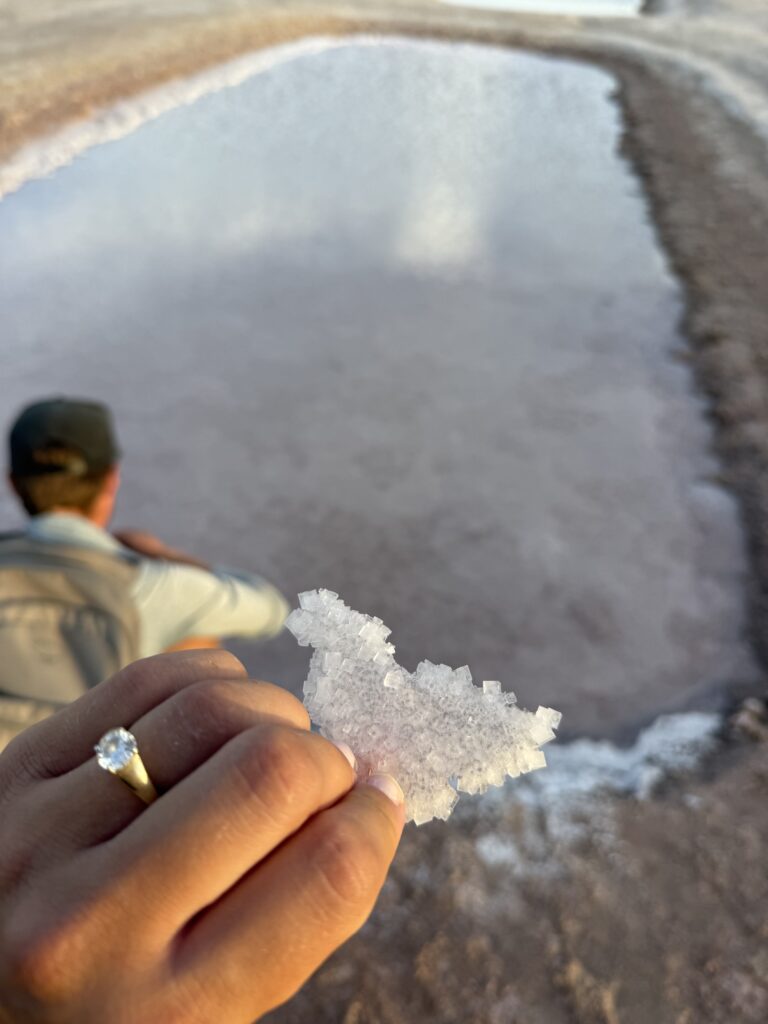
Bahía Salinas was once one of the largest salt producers in the world. Now it’s a ghost town. We spent the week winging and kiting, walking around town and into the nearby hills. From there, we slipped into Honeymoon Cove just outside Puerto Escondido and we started to think more seriously about the Pacific Crossing.


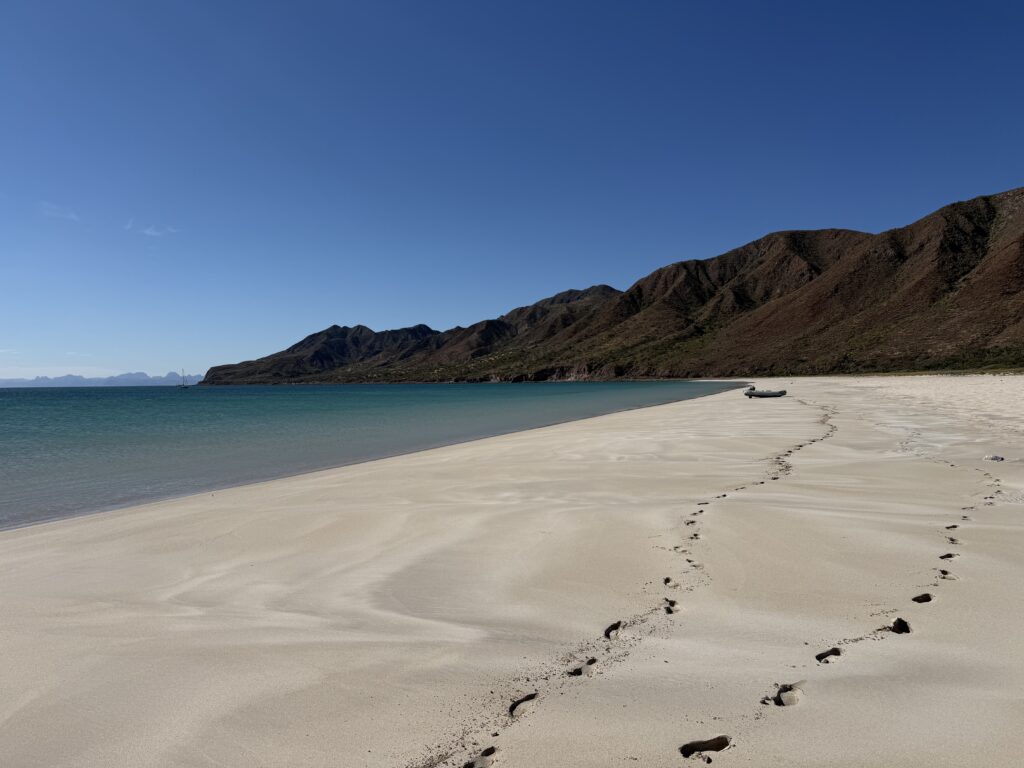


We plan to cross the Pacific at the end of March or early April with our sister ship, Stella Blue. She’s a Saga 43 as well with a capable offshore crew. We don’t have the exact same sails or keels, but the similarities outweigh the differences and we should sail at comparable speeds. They’re racers too, so a little friendly competition feels inevitable, and welcome. There’s comfort in knowing you won’t be alone for the largest stretch of open water on the planet.
I’ve been reading Pacific Crossing Notes, and the following passage sums it up well:
“Consider this, an ocean cruiser will put more hours on the hull in the course of a seventy-two hour passage than some weekend warrior will do in an entire season. A boat has all the systems of a house, packed closely in a corrosive salt-water environment where there’s no repairman on call. You’ll need tools, spare parts, and above all, resourcefulness if you’re going to sail off into the sunset.”
We’ll be at sea for roughly 25 days and we’ll need to be self-sufficient for long after that. We assumed Baja would make marine logistics easy. In some ways, it does. In others, specialty parts are difficult to ship, slow to arrive, or simply unavailable and it’s only going to get harder as we live in-between continents.
All this considered, we decided to hunker down in Puerto Escondido for a few weeks and face the to-do list head-on:
- Apply for long stay visas for French Polynesia in Seattle
- Rabies titration test for Loops (Seattle)
- Create list of spare parts + projects we need to accomplish prior to setting off
- Haul out in Puerto Escondido:
- Repaint bottom
- Replace shaft seal
- Inspect prop + thru-hulls.
We also learned that hauling out in Mexico is not cheaper than work in the US, at least not in peak cruising season. The dream doesn’t discount itself just because you’ve sailed farther south. However, it is warm and there’s a pickleball court, gym, and hottub. Seeing all the east coasters hunker down by this snowpocalypse it sure feels like it could be worse!
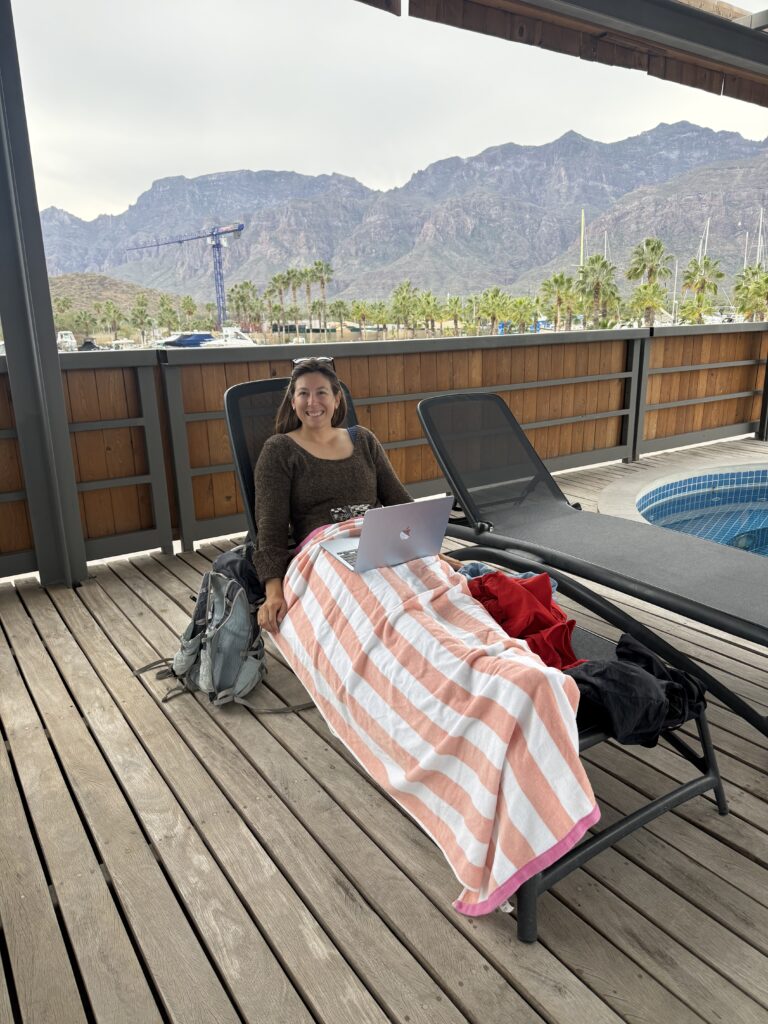

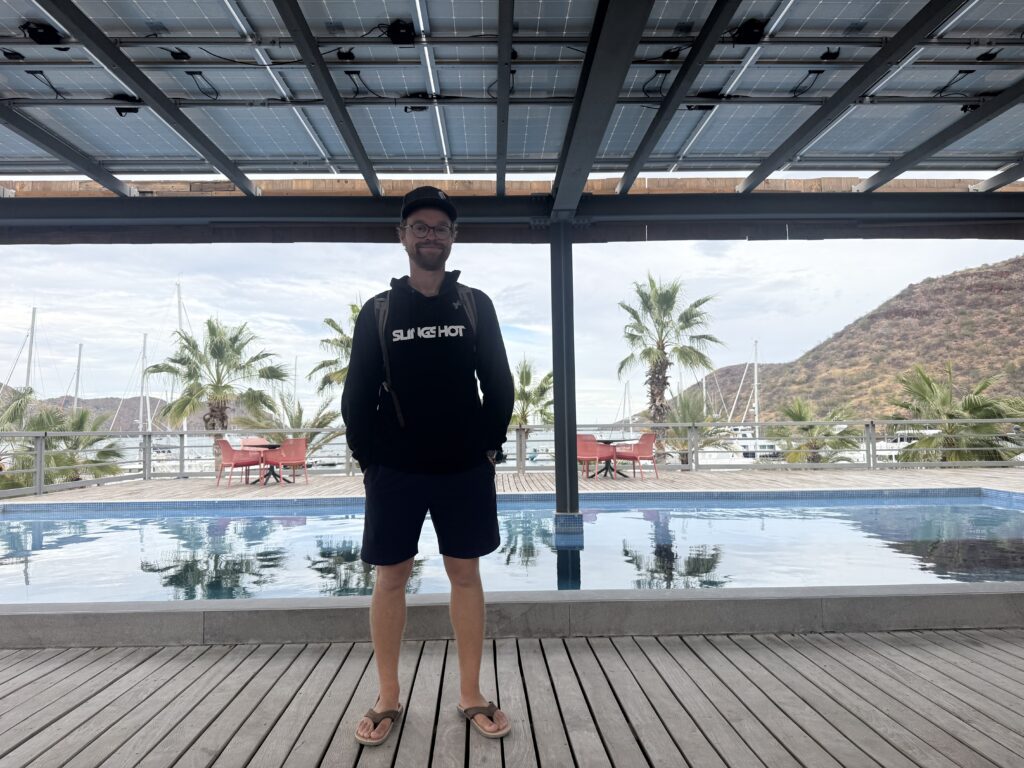
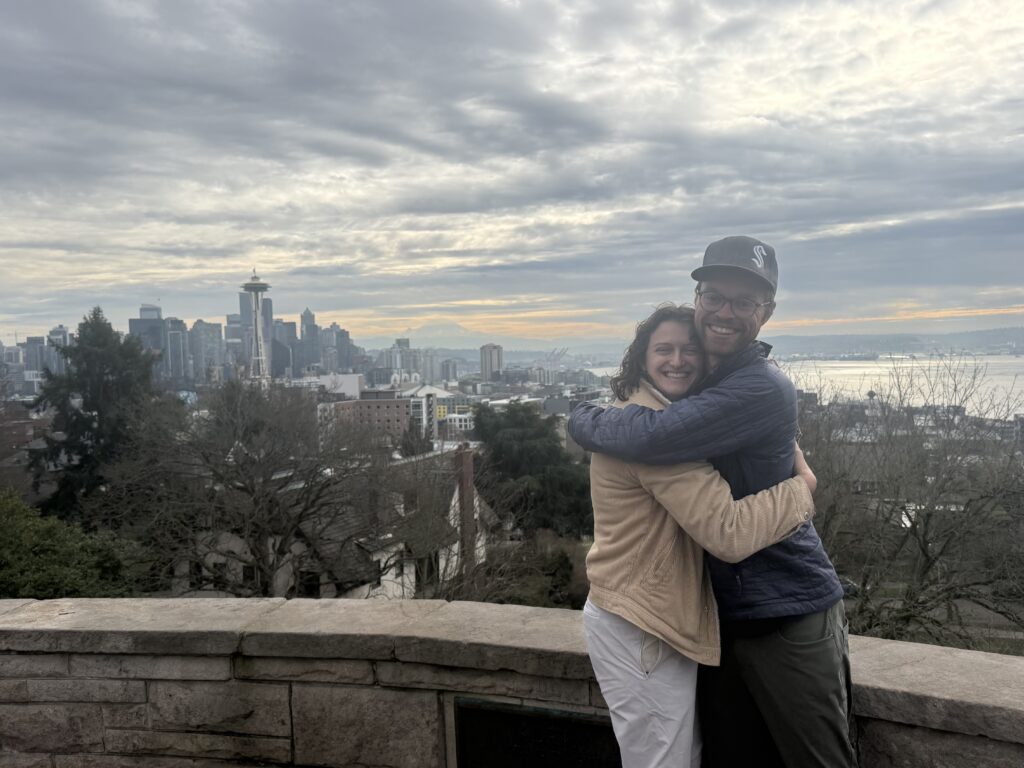
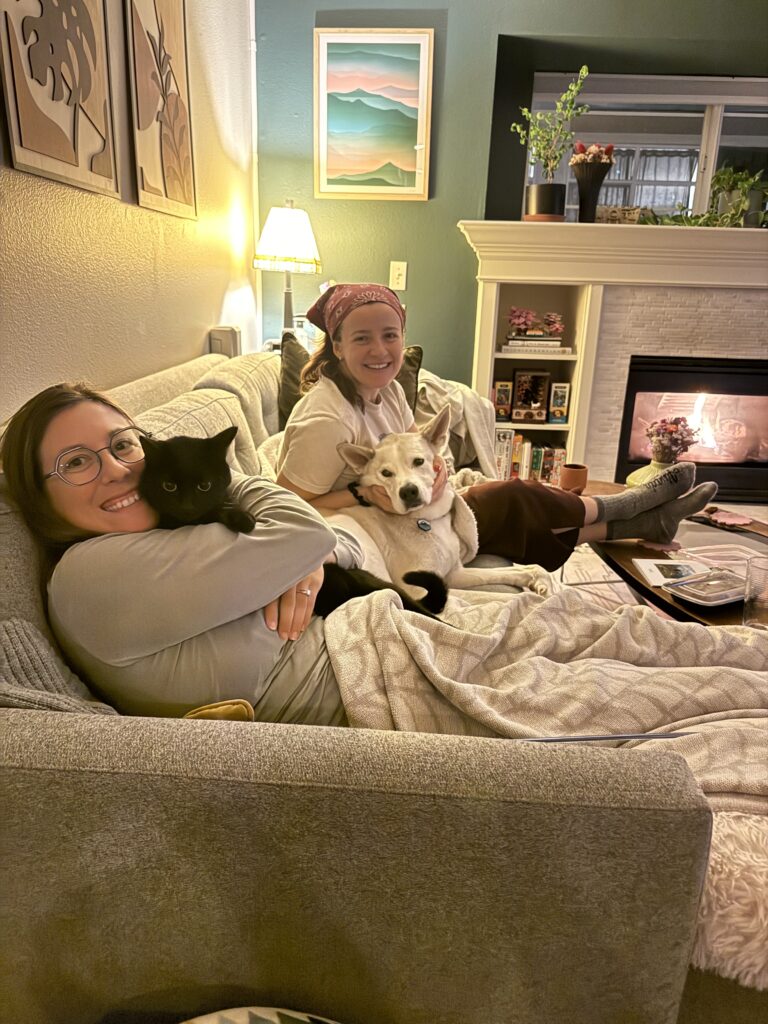
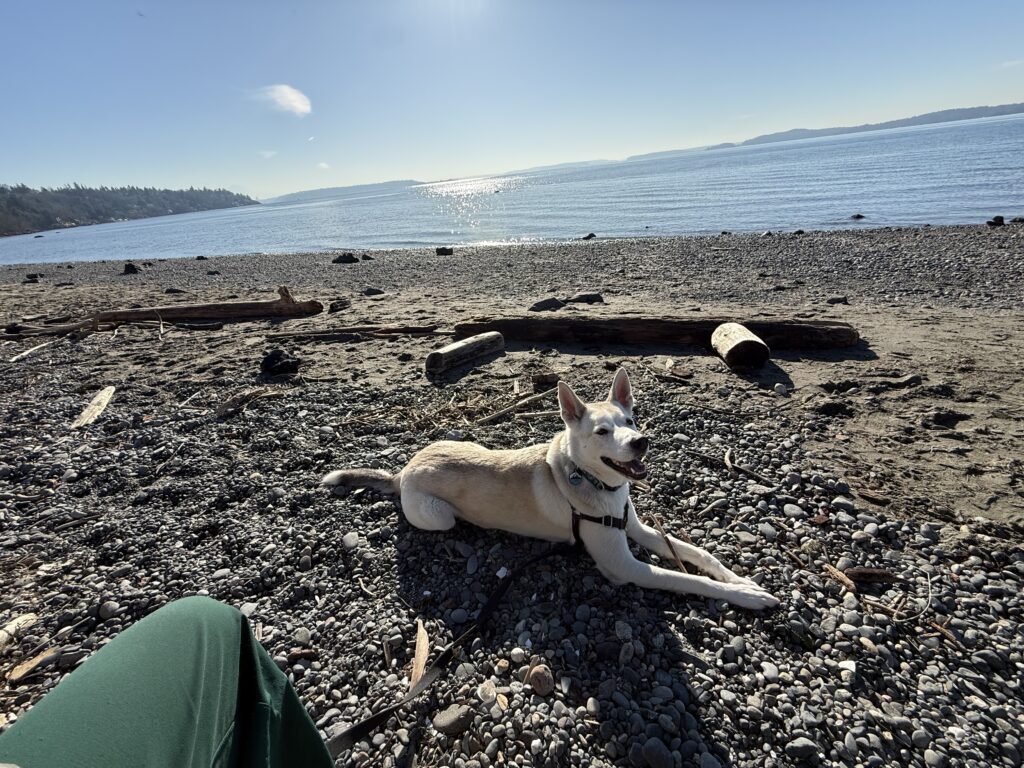
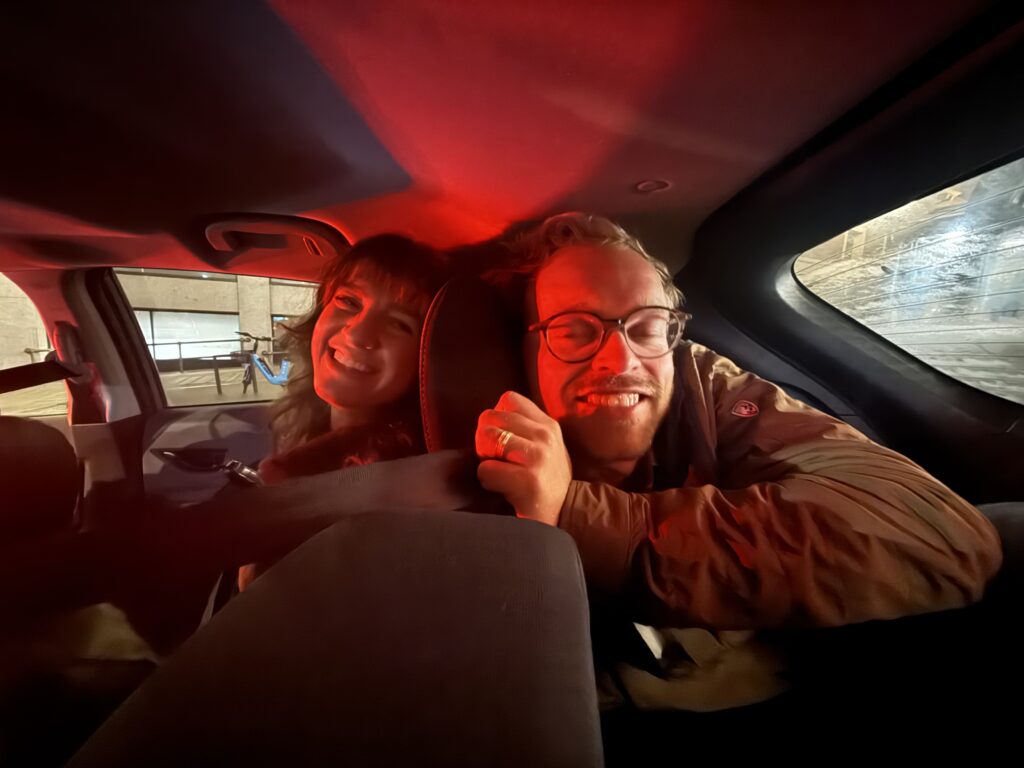
Photos from Seattle…





3 comments
Five trilogies?!!!
As always, your descriptions and pictures of your maritime adventures are so very vivid and engaging. I went on a week long kayak camping trip in the Sea of Cortez starting in Loretto and ending in La Paz 10 years ago. Some of your experiences in the area really resonated with me and brought back many fond memories. Wishing you all the best on this next phase of your amazing journey. With an ocean of love and admiration, Dorsey
You are an inspiration Dorsey! Loretto to La Paz is a serious venture by kayak. Upon arrival in Loretto, Mason and I met a man who was just returning from a kayak circumnavigation of Isla Carmen (1/2 the distance of your venture) and he was wiped! Lots of Love