Well, Mason and I haven’t stepped off Discovery in seven days since my mom left, and a lot has happened.
We knew we had to hustle north. Our Glacier Bay permits started June 21st, giving us just 14 days to cover 770 nautical miles. We kicked off strong, making it just before Dodd Narrows that afternoon, our first tidal pinch point. The channel is so narrow that traffic takes turns running northbound and southbound. At 0730, we slipped through at slack tide, seriously impressed by a log boom flanked by three tugs that took up nearly the entire narrows.
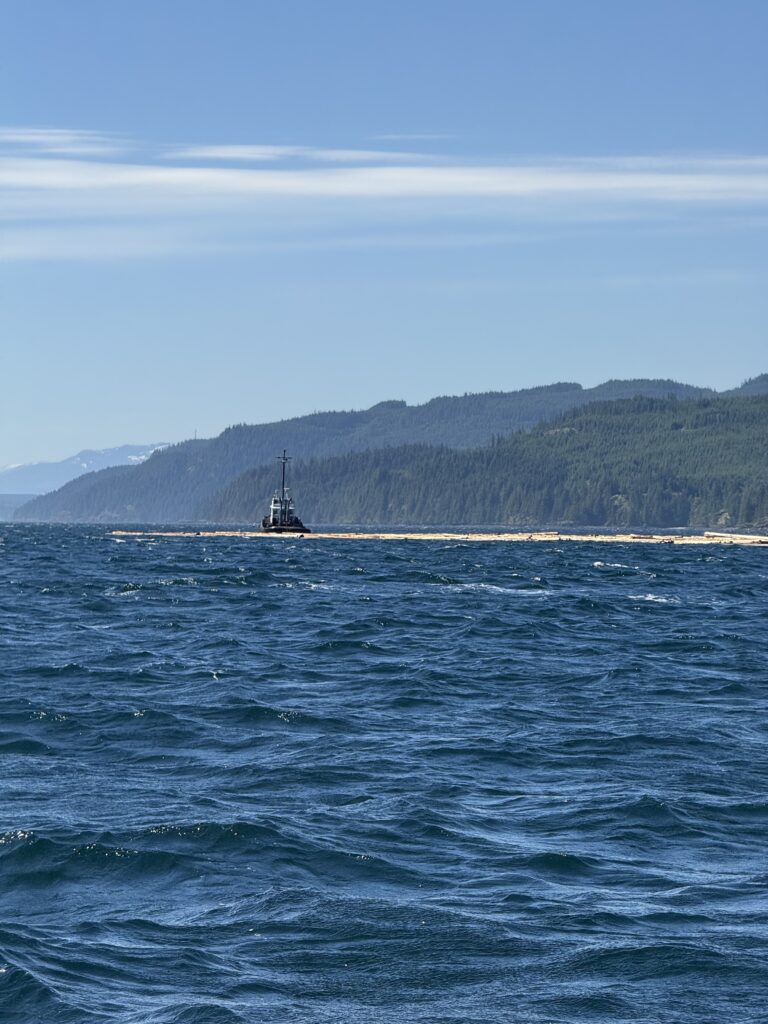


We entered the Strait of Georgia with 20kts on the nose. With three reefs in, we felt solid through three-foot seas. Mason spotted our first wildlife: a massive whale breaching just thirty feet from the boat, followed by a tail dive. Since then, we’ve seen a lot of puffs, but I’m still waiting for my own tail sighting.
When the wind lightened, we tried to shake out a reef, but the main wouldn’t budge. Through binoculars, we saw a nail sticking out of the mast track, jamming the sail cars. We carried on with the reef in and motored when our speed dropped under four knots. We anchored in Campbell River around 2200, totally wiped.
Even so, I insisted we watch The Devil Beneath the Sea, a 30-minute film from 1959 about the demolition of Ripple Rock in Seymour Narrows, our next pinch point. George Vancouver called Seymour Narrows, “one of the vilest stretches of water in the world.” Water from Queen Charlotte Strait funnels through the 750-meter channel up to 16 knots, forming massive whirlpools and boils. As if this turbulence wasn’t enough, lurking just beneath the surface was Ripple Rock, a submerged twin-peaked mountain that claimed over 130 vessels and 110 lives. In the 1950s, engineers drilled into it and packed in two million pounds of dynamite to destroy it once and for all.
We left early the next morning and motored up to the narrows, exchanging emails with Discovery’s prior owners, who were camping nearby. I guess the boat called us both to that spot. Even at slack tide, the narrows boiled. We poured a little rum over the side for the lives lost and the remains of Ripple Rock. Then we tacked up Discovery Passage and around Chatham Point.
Our boat was named after George Vancouver’s ship Discovery, which he sailed along the Northwest Coast in the late 1700s. The man named everything around here: Vancouver Island, Discovery Park, Discovery Passage, Mt. Rainier, Mt. Baker…you name it. His charts were so accurate they were used for decades. He did, however, miss both the Columbia and Fraser Rivers. Two LARGE misses, but the rest was spot on.

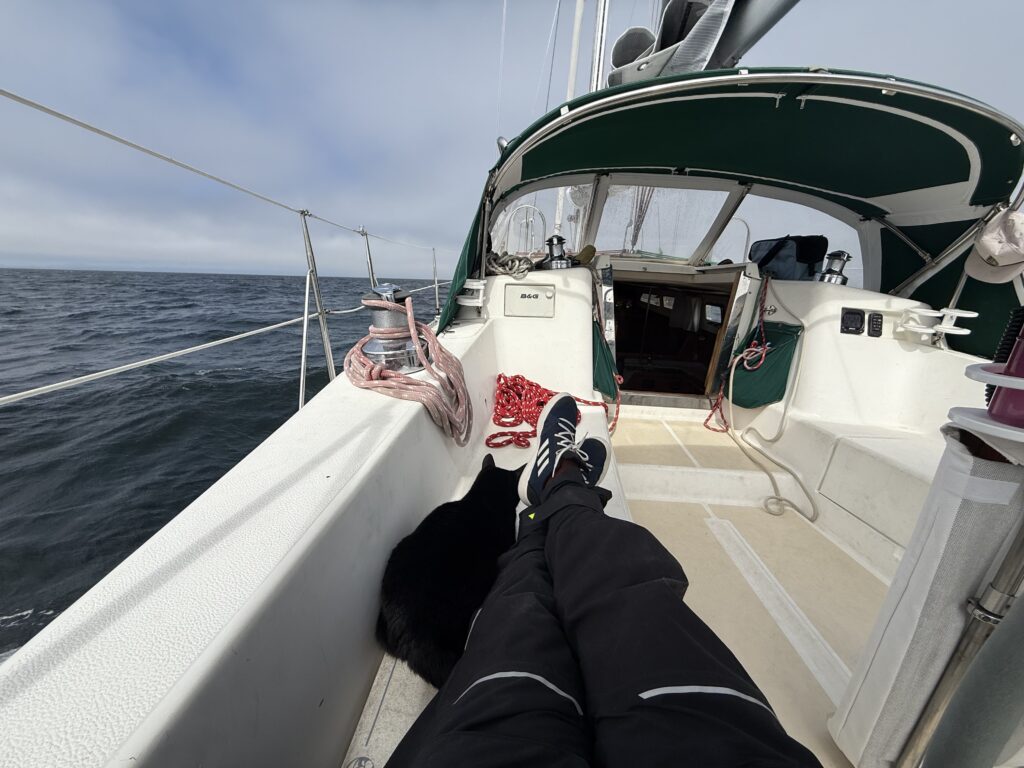


That afternoon, sailing up Johnstone Strait was glorious. A pod of porpoises swam alongside us, bringing huge grins. But when wind and tide turned against each other, chop built to an uncomfortable level. We ducked into Blenkinsop Bay for the night. We’d only made 48 nm, but we were proud of how we handled the passages. Mason went up the mast to tighten the rogue screw and we celebrated with a G&T.
By sunrise Sunday, we were underway again. We motored out of Johnstone Strait in light winds and reached Queen Charlotte Strait by 0900. Again we had 15 to 25 knots on the nose, but our time in the Strait of Georgia and Johnstone Strait had prepared us well. We tacked through shoals and traffic, pushing toward Allison Harbour on the mainland side of British Columbia. George Vancouver “discovered” these shoals by running his Discovery aground. This was a move we were not looking to replicate.
Still feeling good, we pushed around Cape Caution. The conditions were manageable but tiring. We’d been living at a 30-degree heel off and on for two days now. Just before 9 p.m., we ducked behind Egg Island to anchor after covering 100nm. We felt ahead of schedule and ready to crash.
Then the engine wouldn’t start.
It sounded like a dead battery. Mason rushed below while I unfurled the jib and scanned for alternate anchorages. The wind was dying, what little light left was quickly fading, and we were beyond wiped. Mason tried recharging the starter from the house batteries, but no luck. He found a blown fuse, replaced it, and blew another. We dropped anchor in an exposed spot behind Brown Island. Neither of us slept well, rocked by Pacific swells and half-expecting the anchor alarm to go off.
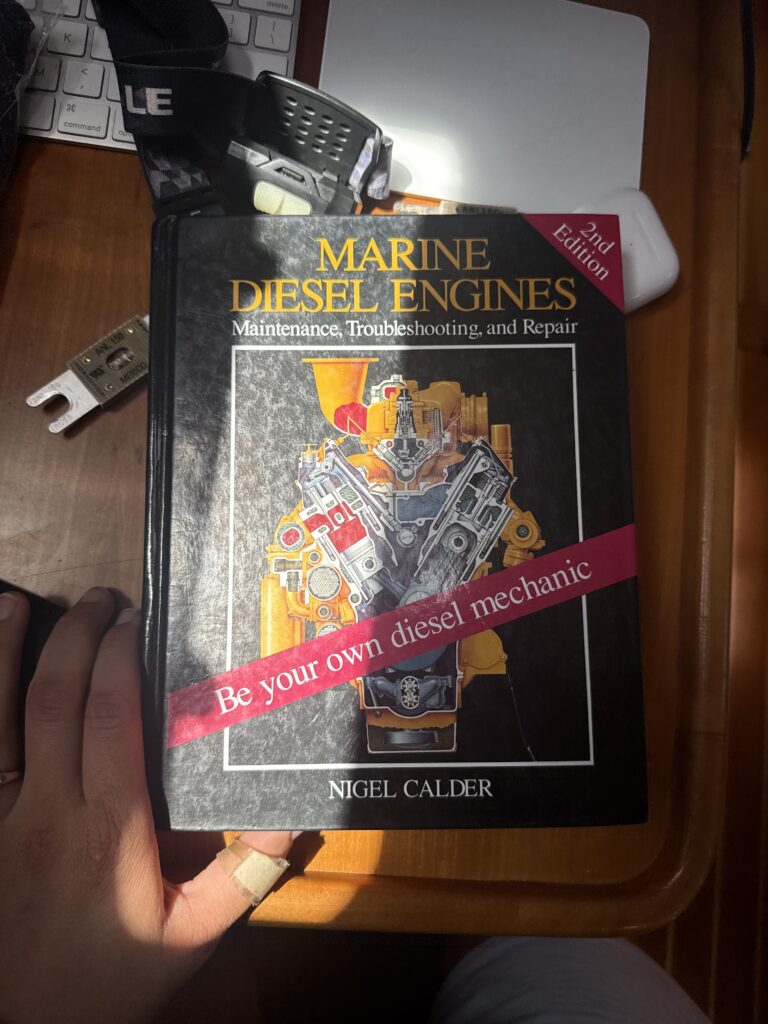
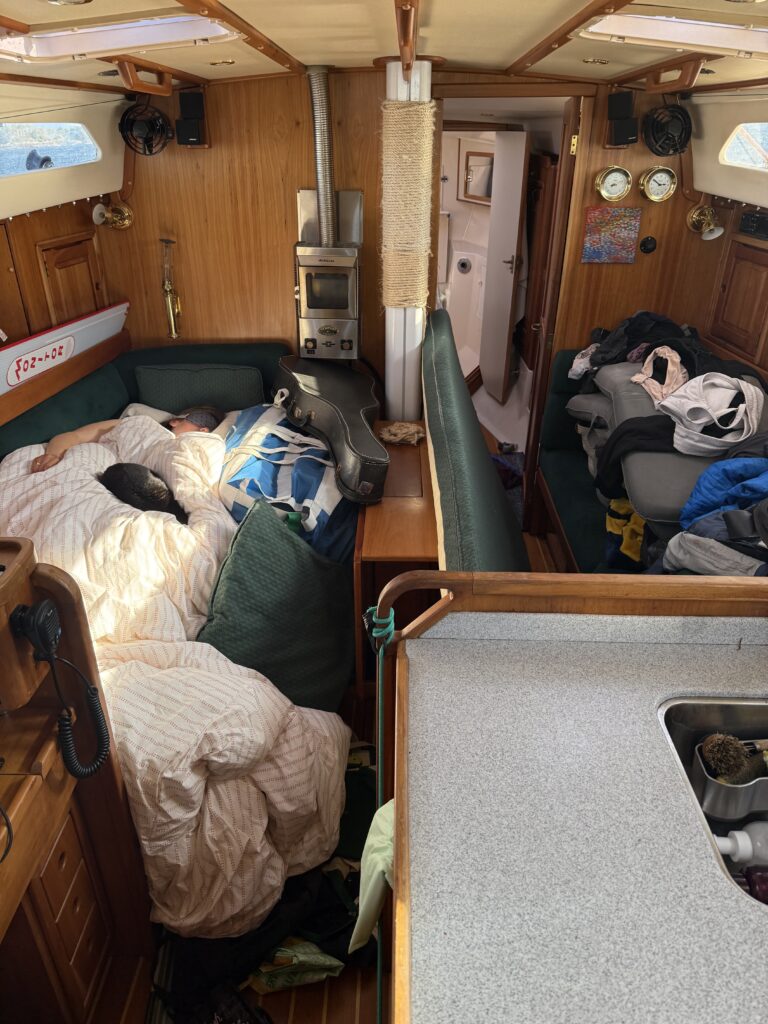


The next day was a stress spiral. Mason cranked the engine by hand to rule out hydrolocking while I banged on the starter motor, hoping for a pin realignment. No dice. The starter was fried.
We spent a second night in the same exposed anchorage, then sailed into a more protected spot the following morning. Back in 2013, during my family’s cruise, our engine broke and we sailed through the entire Bahamas without one. That experience gave me the confidence to maneuver under sail. We strapped our dinghy, previously Frøya’s dinghy, to the side of Discovery in case we needed help maneuvering, a spot she was familiar with.
We successfully made it to the new anchorage feeling both stressed and relieved. There was another boat on AIS, which turned out to be big powerboat, Serenity, with a 60-horsepower Whaler on the back. Its owner, Bill, dinghied over with frozen prawns and gave us a hard time for not asking for a tow the day before. It was a good reminder: mariners are usually more than happy to lend a hand. We’re all out here together.
After talking with Bill, we decided to ship a new starter to Bella Bella, 50 miles north, and sail there in our own mini Race to Alaska, sans oars or pedal drives. We chose to tack up Fitz Hugh Sound for its calm waters, numerous bailout out, and traffic in case we needed help. We made it in two days.


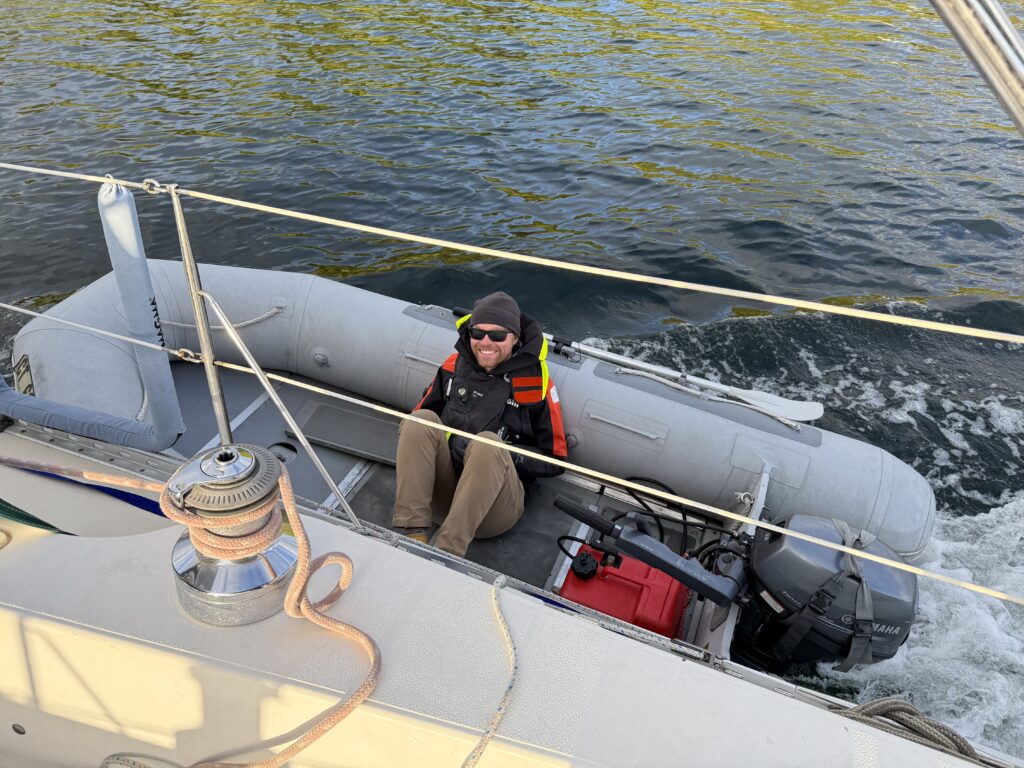
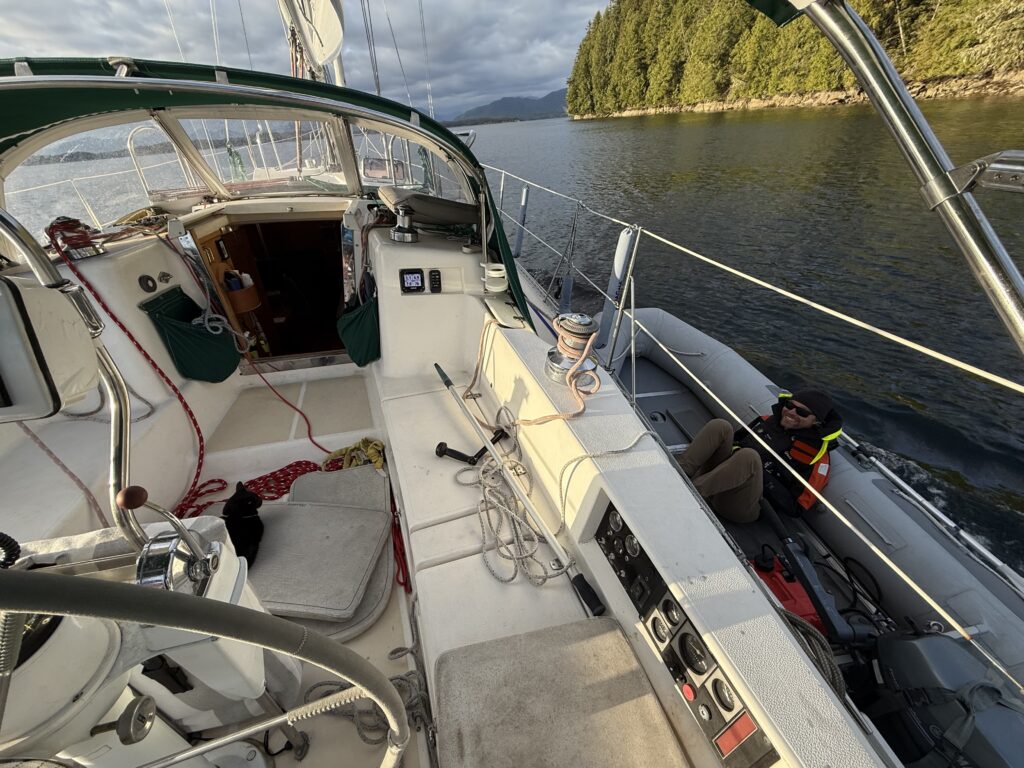
We’re lucky to have the skills to maneuver without a motor, but we definitely didn’t expect to use them this soon. This was only four days, and I’ve been thinking a lot about the pressure my dad must have felt in the Bahamas. Entering new territory is stressful enough and doing it without a motor adds a whole new layer. When the wind dies, you’re at the mercy of the currents. Racing in Long Island Sound taught me patience in light wind. Mason’s still working on that. I’m grateful to share the weight of these decisions with him. I don’t think I could do it alone.
Today we’ll dinghy to the airport, provision, and hopefully reinstall the new starter. We technically still have Glacier Bay permits, but it’s looking unlikely. At first we were bummed, but it’s probably for the best: don’t make plans, and more shit’s gonna break. For now, we’ll see how long this takes and then we’ll be MOTORING up Grenville Channel, thank you very much.
And for those wondering, sweet Loops is adjusting just fine. When it gets rough, he wedges himself into the aft cabin and braces for impact. He’s also mastered crab-walking up the saloon by staying low to the floor. At anchor, he forgets the day and is back to his playful self.


7 comments
Damn, y’all are getting tested early! Stay strong – we know you will! and congrats on the whale tale (Mason)
So proud of you. Crying. And thank you for informing regarding Loops’wellbeing.
Thanks for the update. We’re checking the live tracker, wondering what each day brings. you. Love the gorgeous photos! Stay tough!
Lane this is so great , you are an extremely talented writer. India just sent this to me.
Following with great interest! I’m not surprised at your ability to be nimble. Your dad always was. Looking forward to your next travel journal entry. It is going to be a great adventure!
Your posts stress me out girl! So impressed with your resilience and adventurous spirit! Cheering you on from the sidelines!
You’re both badasses! I would have shit myself 100 times over by now.